
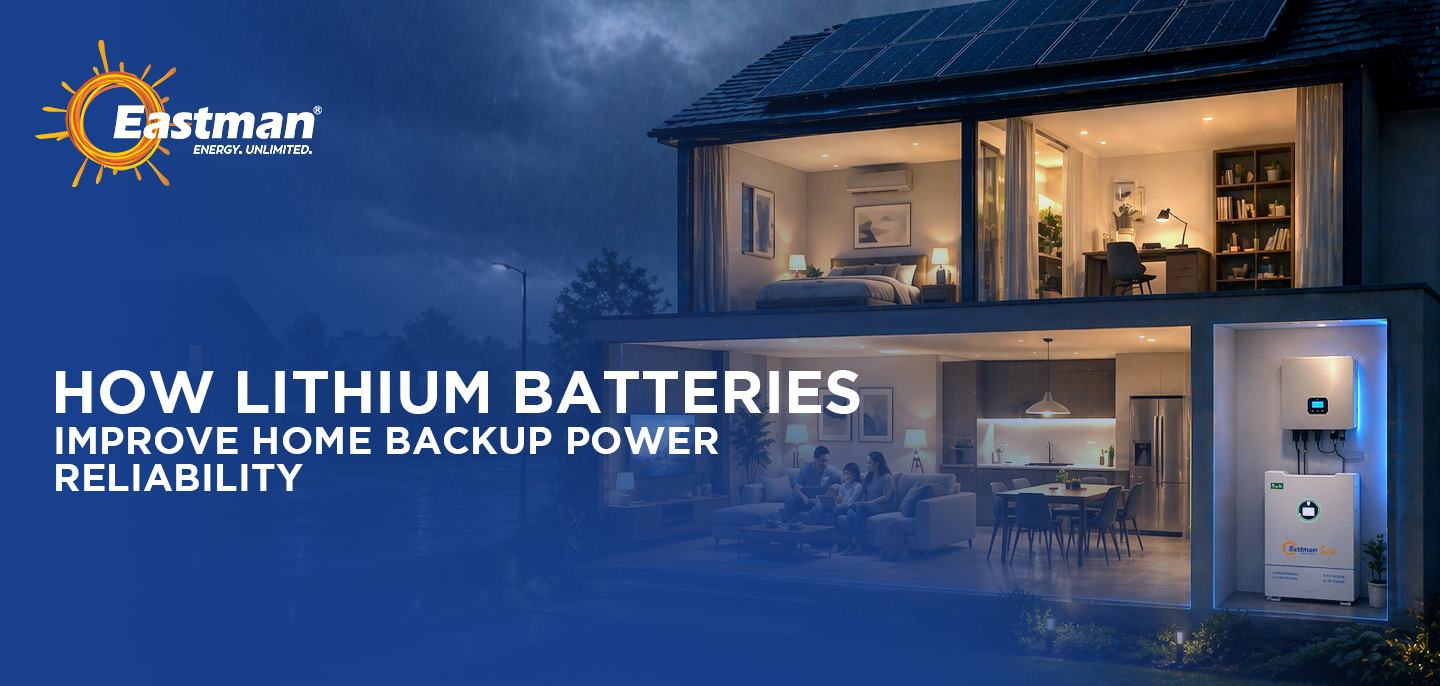
How Lithium Batteries Improve Home Backup Power Reliability
In today’s world, where power outages can disrupt work, safety, and daily comfort, having a reliable home backup system is no longer a luxury, it’s a necessity. Lithium-ion batteries have emerged as a game-changing solution in home energy storage, offering significant advantages over traditional backup options like lead-acid batteries. Their advanced technology directly improves the reliability, efficiency, and performance of home backup systems.
- Consistent and Stable Power Supply
Lithium batteries provide a steady and consistent voltage output throughout their discharge cycle. Unlike traditional batteries that experience voltage drops as they discharge, lithium batteries maintain stable performance. This ensures that sensitive appliances like computers, routers, and medical equipment continue to operate without interruptions or damage.
- Faster Charging Capability
One of the key advantages of lithium batteries is their ability to charge quickly. During short power availability windows such as intermittent grid supply or limited solar generation lithium batteries can store more energy in less time. This rapid charging ensures that your backup system is always ready for the next outage.
- Higher Depth of Discharge (DoD)
Lithium batteries typically offer a depth of discharge of up to 80–95%, compared to 50–60% in lead-acid batteries. This means more usable energy is available during power cuts, extending backup duration and reducing the risk of complete power loss during extended outages.
- Longer Lifespan and Reliability
Lithium batteries have a significantly longer cycle life often 3 to 5 times that of traditional batteries. This means fewer replacements, lower maintenance, and more dependable performance over time. Their durability makes them ideal for frequent power outage conditions.
- Intelligent Battery Management System (BMS)
Modern lithium batteries come equipped with an advanced Battery Management System (BMS). The BMS monitors parameters such as voltage, temperature, and current in real time. It protects the battery from overcharging, deep discharge, overheating, and short circuits, ensuring safe and reliable operation.
- Better Performance in Varying Conditions
Lithium batteries perform efficiently across a wide range of temperatures and load conditions. Whether during peak summer heat or fluctuating load demands, they maintain consistent output, making them highly dependable for residential applications.
- Seamless Integration with Solar Systems
For homes using solar energy, lithium batteries integrate smoothly with inverters and energy management systems. They can efficiently store excess solar energy during the day and supply it during nighttime or outages, improving overall energy reliability and independence.
- Low Maintenance Requirements
Unlike lead-acid batteries, lithium batteries require minimal maintenance. There is no need for water topping, regular cleaning, or frequent inspections. This reduces downtime and ensures that the backup system remains operational with minimal effort.
Conclusion
Lithium-ion batteries have transformed home backup power systems by offering higher efficiency, longer life, and enhanced safety. Their ability to deliver stable power, charge quickly, and operate reliably under various conditions makes them the preferred choice for modern households. Investing in a lithium-based backup system not only improves reliability but also provides peace of mind during unexpected power outages.
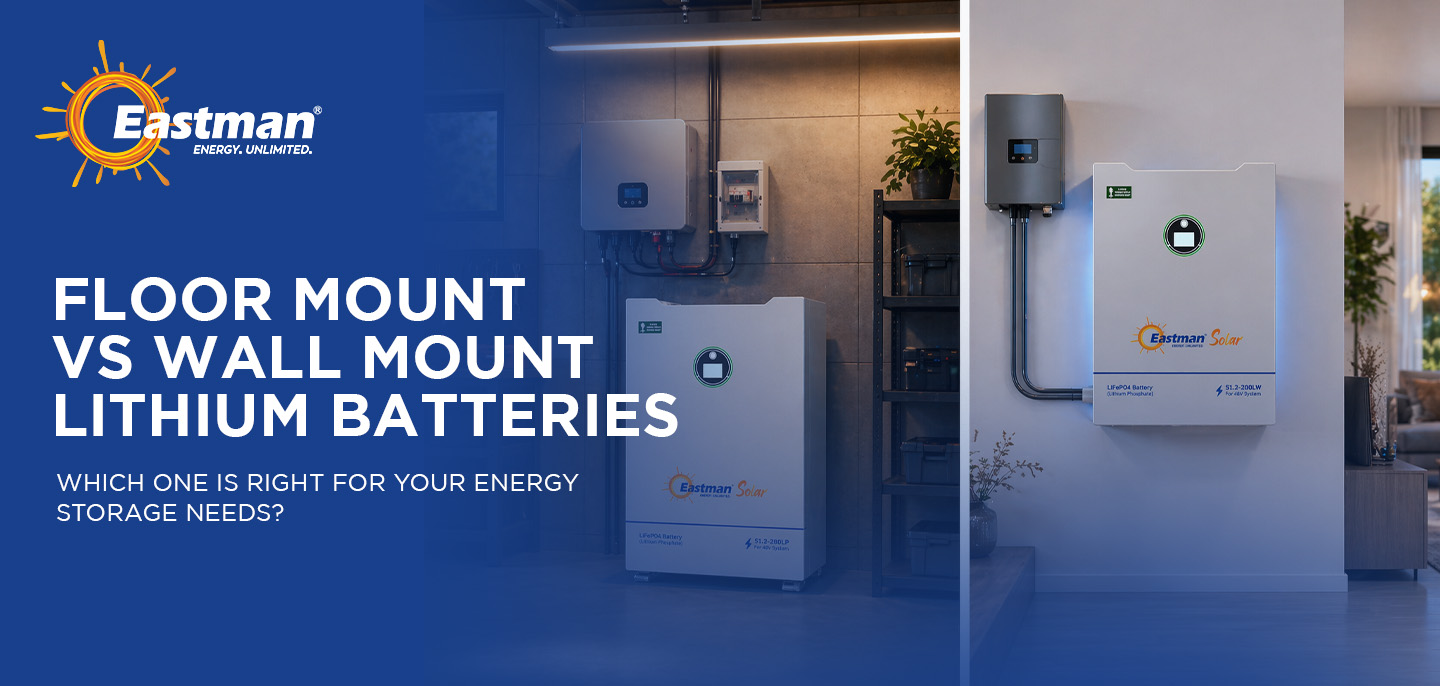
Floor Mount vs Wall Mount Lithium Batteries: Which One Is Right for Your Energy Storage Needs?
As the demand for reliable and efficient energy storage grows, lithium batteries have become the preferred choice for residential and commercial applications. Whether used with solar systems, inverters, or backup power setups, lithium batteries offer high efficiency, longer lifespan, and superior performance compared to traditional batteries. However, one common question customers face is;
Should I choose a floor mount or wall mount lithium battery?
Let’s explore the differences, advantages, and ideal use cases of both options to help you make the right decision.
What is a Floor Mount Lithium Battery?
A floor mount lithium battery is designed to be placed directly on the ground. These batteries are typically larger in capacity and built for heavy-duty applications.
Key Features:
- Higher energy storage capacity
- Strong and stable structure
- Expandable design for larger systems
- Ideal for commercial and industrial use
Advantages:
1. Higher Capacity Options
Floor-mounted batteries usually support higher Ah ratings and larger kWh storage, making them suitable for bigger homes, offices, and commercial buildings.
2. Better Heat Dissipation
Since they are placed on the floor with more spacing, heat management is generally more efficient.
3. Easy Expansion
Many floor-mount systems are modular, allowing multiple units to be stacked or connected in parallel.
4. Strong and Durable
These batteries are built with heavy-duty enclosures, making them ideal for demanding environments.
Best For:
- Large residential solar systems
- Commercial buildings
- Factories and warehouses
- High power backup requirements
What is a Wall Mount Lithium Battery?
A wall mount lithium battery is designed to be fixed on the wall, saving floor space and offering a sleek, modern appearance.
Key Features:
- Compact and lightweight design
- Space-saving installation
- Ideal for residential applications
- Clean and aesthetic look
Advantages:
1. Space Saving Design
Wall-mounted batteries are perfect for homes with limited space. They can be installed in utility rooms, garages, or small energy storage areas.
2. Easy Installation
Most wall-mount lithium batteries are plug-and-play, making installation simple and quick.
3. Modern Appearance
They provide a neat and professional look, which is ideal for modern residential setups.
4. Suitable for Moderate Loads
These batteries are perfect for running lights, fans, appliances, and essential home loads.
Best For:
- Small to medium homes
- Apartments
- Residential solar systems
- Areas with limited installation space
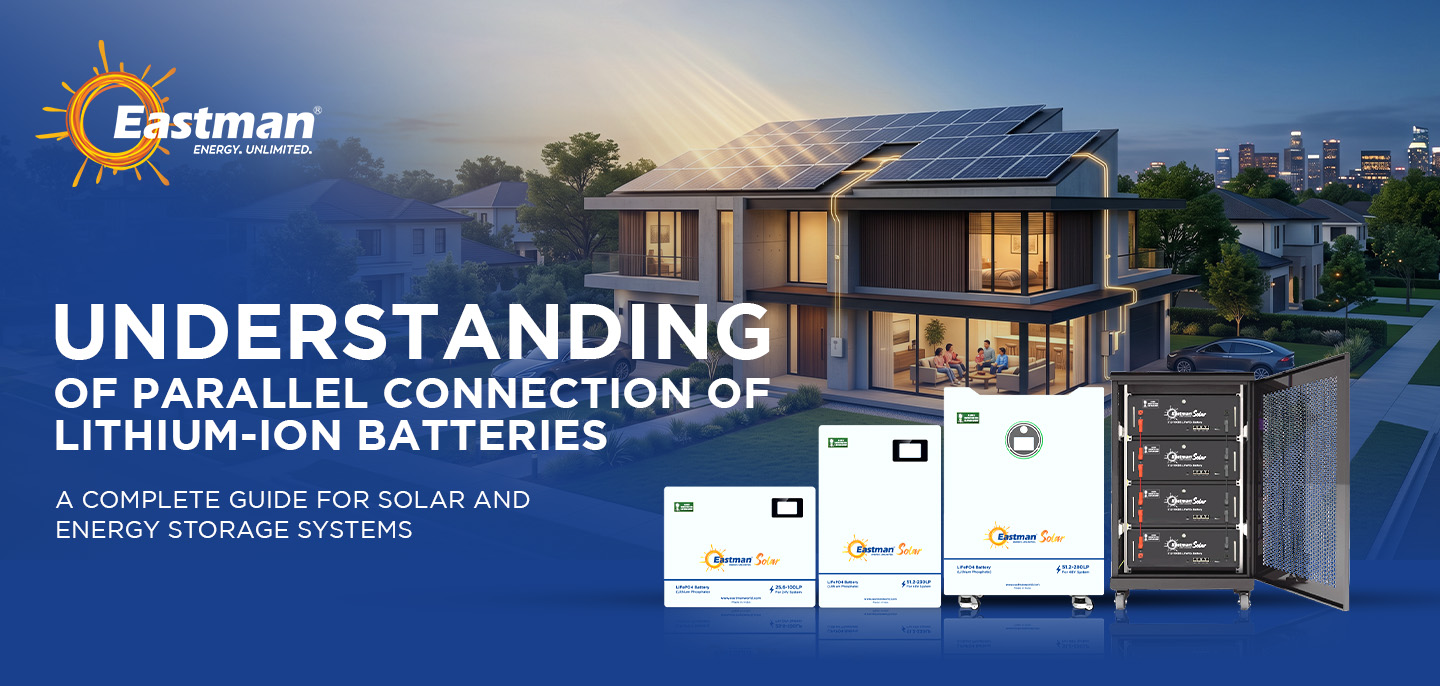
Understanding of Parallel Connection of Lithium-Ion Batteries: A Complete Guide for Solar and Energy Storage Systems
Lithium-ion batteries have become the backbone of modern solar energy storage systems due to their high efficiency, long lifespan, and compact design. As energy demands increase, many homeowners and businesses look for ways to expand their storage capacity. One of the most practical and widely used methods is the parallel connection of lithium-ion batteries.
In this blog, we will explain what parallel connection means, how it works, its benefits, safety considerations, and best practices for solar and inverter systems.
What Does Parallel Connection Mean?
When lithium-ion batteries are connected in parallel, all the positive terminals are connected, and all the negative terminals are connected.
Key Result of Parallel Connection:
- Voltage remains the same
- Capacity (Ah) increases
- Total energy storage increases
For Example:
If you connect:
- Two 51.2V 100Ah lithium batteries in parallel
You get: - 51.2V 200Ah system
The system voltage stays at 51.2V, but the storage capacity doubles.
This configuration is commonly used in residential solar systems, commercial backup systems, and hybrid energy storage applications.
Why Connect Lithium Batteries in Parallel?
- Increase Storage Capacity
Parallel connection allows you to increase amp-hour (Ah) capacity without changing system voltage. This is ideal when:
- You need longer backup time
- Energy consumption has increased
- You want to store more solar energy
For example, if your home initially required 5kWh storage and now needs 10kWh, you can simply add another battery in parallel.
- Easy Scalability
One of the biggest advantages of lithium batteries is scalability. Instead of replacing your entire battery bank, you can add additional units in parallel as your power needs grow.
This makes lithium battery systems:
- Future-ready
- Flexible
- Cost-efficient in the long run
- Better Load Distribution
When multiple batteries are connected in parallel, the load current is shared between them.
This means:
- Less stress on individual batteries
- Reduced heating
- Improved cycle life
- Better overall system stability
Properly balanced parallel systems can actually enhance battery performance and longevity.
- Ideal for Solar Energy Storage
Most residential and commercial solar inverters operate at fixed voltages like 24V or 48V. Parallel connection allows you to increase capacity while maintaining the required inverter voltage.
For example:
- 48V inverter → Add multiple 48V lithium batteries in parallel. No need to change inverter or wiring configuration significantly.
Important Safety Considerations Before Connecting in Parallel
While parallel connection is simple in theory, it must be done correctly to ensure safety and optimal performance.
1. Same Voltage Level Before Connection
Before connecting batteries in parallel:
- Ensure all batteries have the same voltage
- Ideally, charge them to similar State of Charge (SOC)
If batteries with different voltage levels are connected, a large current can flow between them, which may damage the battery or BMS.
2. Use Identical Battery Models
Always use:
- Same brand
- Same capacity (Ah)
- Same chemistry (LiFePO4 recommended)
- Same production batch if possible
Avoid mixing:
- Old and new batteries
- Different capacities (e.g., 100Ah with 150Ah)
- Different brands
This can cause imbalance and reduce overall performance.
3. BMS Compatibility
Each lithium battery has a Battery Management System (BMS). When connecting multiple batteries:
- Ensure BMS supports parallel communication
- Follow manufacturer’s master-slave configuration
- Check maximum parallel limit (we can do max. 15 nos.)
Improper BMS communication can lead to uneven charging and discharging.
4. Proper Cable Sizing
Since current increases in parallel systems:
- Use appropriate cable thickness
- Ensure equal cable length for each battery
- Use high-quality connectors
- Install DC breakers or fuses
Equal cable length ensures uniform current sharing between batteries.
How Many Lithium Batteries Can Be Connected in Parallel?
The number depends on:
- Manufacturer guidelines
- BMS limitations
- Inverter compatibility
Typical Eastman allows:
- 15 batteries in parallel
Always check:
- Maximum current rating
- Communication protocol (CAN/RS485)
- System expansion capability
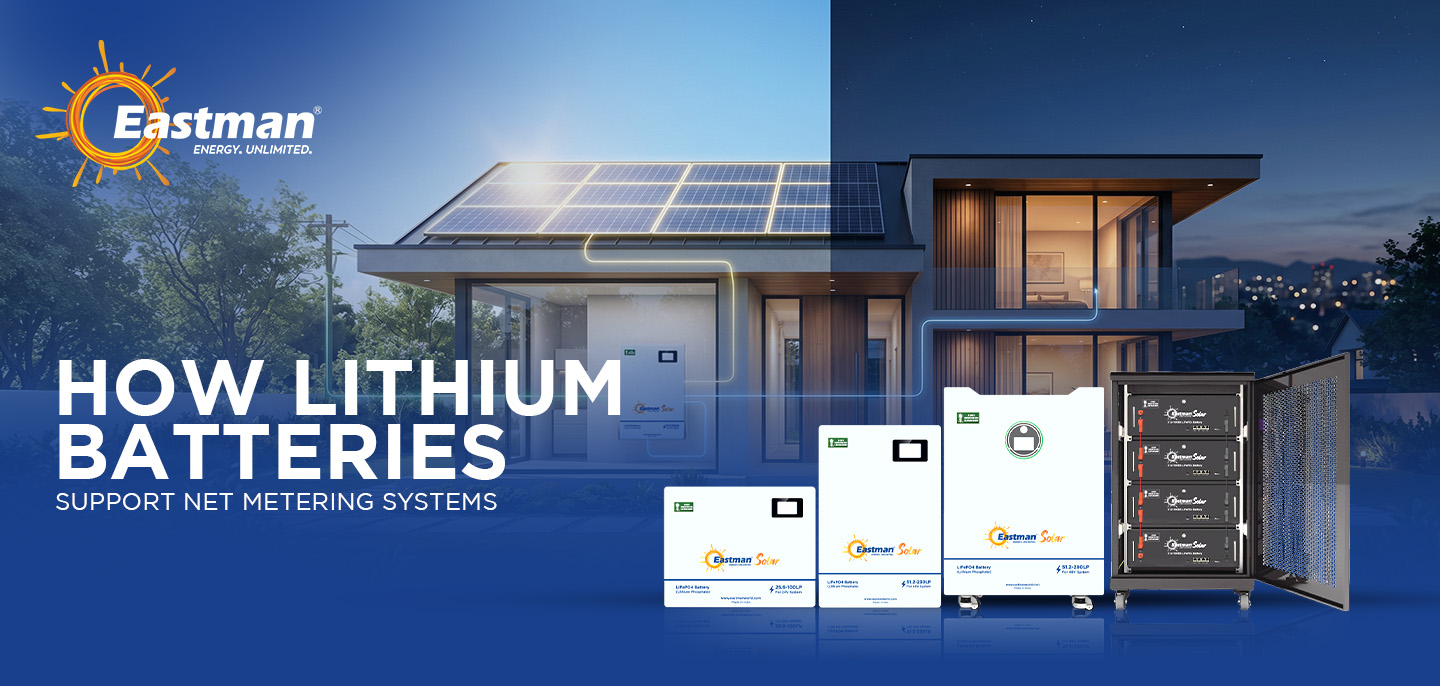
How Lithium Batteries Support Net Metering Systems
With the rapid growth of rooftop solar installations, net metering has become one of the most attractive policies for homeowners. It allows solar system owners to export excess electricity to the grid and receive credits in return. However, while net metering is beneficial, combining it with lithium battery storage can significantly enhance savings, energy independence, and system efficiency.
In this blog, we will explore how lithium batteries support net metering systems and why they are becoming an essential part of modern residential solar setups.
What Is Net Metering?
Net metering is a billing mechanism that allows homeowners with solar panels to send excess electricity back to the grid. When your solar system generates more power than your home consumes:
- The surplus energy is exported to the grid.
- You receive credits from your electricity provider.
- These credits offset your electricity usage at night or during low solar production.
This system reduces electricity bills and improves return on investment for rooftop solar systems.
The Limitation of Net Metering Alone
While net metering is beneficial, it has certain limitations:
- Export tariffs may be lower than retail electricity rates.
- Policies and regulations may change over time.
- Some utilities limit the amount of energy that can be exported.
- Power outages still leave homes without electricity (in most grid-tied systems).
This is where lithium battery storage adds significant value.
How Lithium Batteries Enhance Net Metering Systems
- Store Excess Solar Energy Instead of Exporting It
Instead of sending surplus energy to the grid at a lower tariff, a lithium battery stores that energy for later use.
For example:
- Daytime: Solar generates excess power → battery stores it.
- Nighttime: Home runs on stored solar energy instead of grid power.
This increases self-consumption, meaning you use more of your own solar power rather than selling it at a lower rate.
- Maximize Electricity Bill Savings
In many regions, the export rate (feed-in tariff) is lower than the electricity purchase rate.
By using lithium batteries:
- You reduce dependence on grid electricity.
- You avoid buying expensive peak-hour electricity.
- You increase overall savings.
The more solar energy you consume directly, the faster your system pays for itself.
- Provide Backup During Power Cuts
Traditional grid-tied net metering systems shut down during power outages for safety reasons.
However, when you add a lithium battery with a hybrid inverter:
- The system can isolate from the grid.
- The battery supplies backup power.
- Essential appliances continue running.
This is especially beneficial in areas with frequent power cuts.
- Reduce Grid Dependency
Lithium battery storage allows homeowners to:
- Use solar energy 24/7
- Reduce reliance on utility companies
- Protect against future tariff increases
Over time, this increases energy independence and financial security.
- Support Time-of-Use (TOU) Tariffs
In some areas, electricity prices vary depending on time of day.
Lithium batteries can:
- Store energy during low-cost periods
- Discharge during high-cost peak hours
This intelligent energy management further reduces electricity bills.
Why Lithium Batteries Are Ideal for Net Metering Systems
Not all batteries are suitable for residential solar applications. Lithium batteries (especially LiFePO4) offer significant advantages:
High Efficiency
Lithium batteries have round-trip efficiency of 95% or higher, meaning minimal energy loss during charging and discharging.
Longer Lifespan
- 4000–6000+ cycles
- 8–15 years lifespan
This matches the long-term investment nature of solar systems.
Faster Charging
Lithium batteries charge quickly during peak solar hours, maximizing energy capture.
Compact and Maintenance-Free
Unlike lead-acid batteries, lithium batteries:
- Require no water topping
- Produce no harmful gases
- Can be installed indoors safely
Example: 48V Lithium Battery with Net Metering
Consider a home with:
- 5kW rooftop solar system
- 48V 100Ah lithium battery
During the day:
- Solar powers appliances
- Excess energy charges the battery
- Extra surplus goes to the grid
At night:
- Battery powers lights, fans, refrigerator
- Minimal grid usage
This setup increases self-consumption and reduces monthly electricity bills significantly.
Does Adding a Lithium Battery Replace Net Metering?
No. Instead, it optimizes net metering.
Think of it as:
- Net metering = earn credits
- Lithium battery = store and use your own power first
The combination provides:
- Better savings
- Backup power
- Higher energy independence
Protection against policy changes
Future of Net Metering with Battery Storage
Globally, net metering policies are evolving. Some regions are:
- Reducing export tariffs
- Introducing grid charges
- Limiting export capacity
In such cases, battery storage becomes even more valuable because:
- It reduces dependence on policy benefits.
- It ensures you maximize your own solar energy usage.
- It stabilizes household energy costs.
Lithium battery integration is quickly becoming a standard feature in modern residential solar systems.
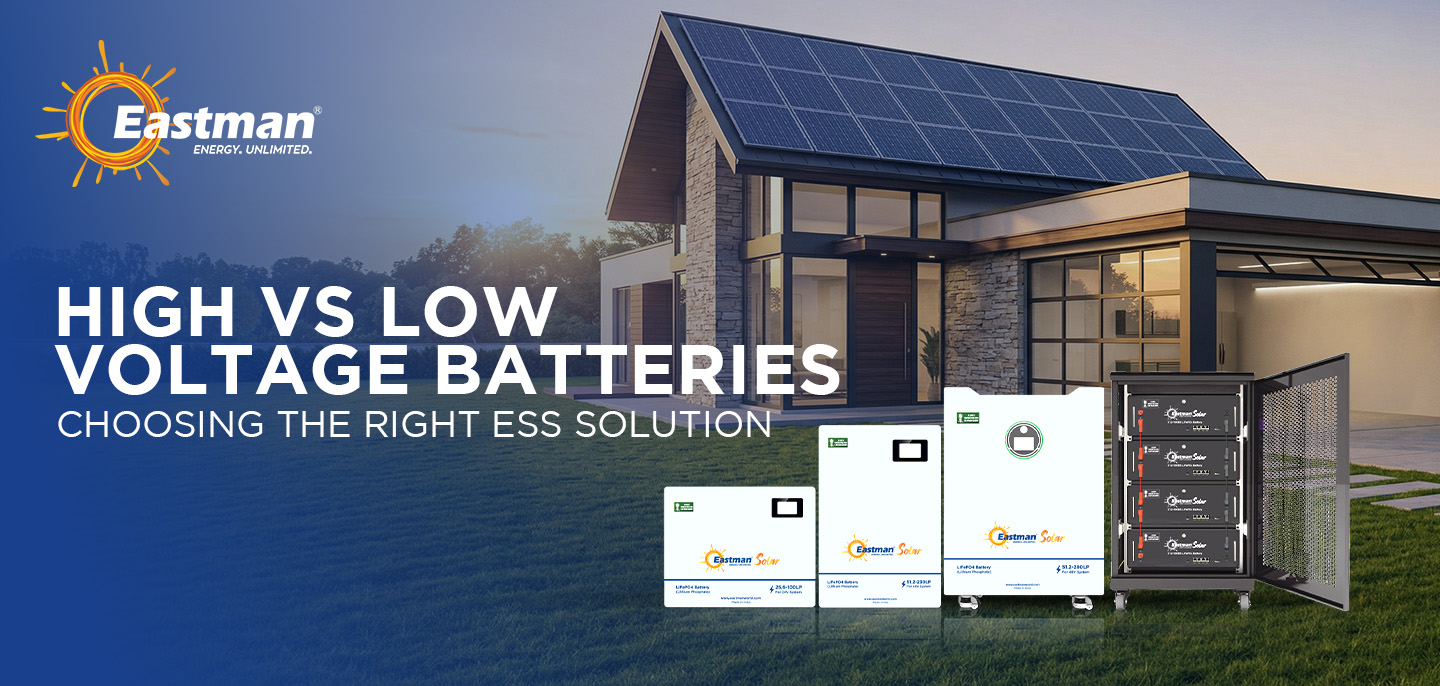
High vs Low Voltage Batteries: Choosing the Right ESS Solution
Energy Storage Systems (ESS) are becoming an essential part of modern energy infrastructure. Whether it’s a home with rooftop solar, a commercial building, or an industrial facility, energy storage helps ensure reliable power, better energy management, and improved efficiency.
When selecting an ESS battery, one of the most common questions people ask is:
Should I choose a High Voltage battery or a Low Voltage battery?
The answer isn’t always straightforward. The right choice depends on factors such as energy consumption, system size, budget, and future expansion plans rather than a one-size-fits-all solution.
What is a Low Voltage ESS Battery?
Low voltage ESS batteries typically operate within a range of 48V to 100V. These systems are commonly used in residential solar installations and small backup power setups.
Because of their simpler design and easier installation, low voltage batteries are a popular choice for homeowners.
Key Advantages
- Safer and easier to install and maintain
- More affordable for smaller systems
- Flexible installation options
- Easy to expand by adding additional battery modules
Ideal Applications
Low voltage ESS batteries work best in situations such as:
- Homes with rooftop solar systems
- Small offices or shops
- Backup power for essential household appliances
- Users with moderate daily energy consumption
For homeowners looking for a simple, reliable, and cost-effective energy backup solution, low voltage systems are often the ideal starting point.
What is a High Voltage ESS Battery?
High voltage ESS batteries generally operate between 100V and 1000V. These systems are designed to handle larger energy loads and deliver higher power output. They are typically used in large residential setups, commercial buildings, and industrial energy storage systems where higher efficiency and performance are required.
Key Advantages
- Higher overall system efficiency
- Lower energy losses during operation
- Better compatibility with large solar installations
- Works well with advanced energy management systems
Ideal Applications
High voltage systems are commonly used in:
- Large homes or residential complexes
- Commercial buildings and factories
- Electric Vehicle (EV) charging infrastructure
- Projects that require continuous high-power output
As energy demand increases, high voltage systems become increasingly valuable due to their performance and efficiency advantages.
Which ESS Battery Should You Choose?
Before selecting an energy storage system, it’s important to consider a few practical questions:
- How much electricity do you use daily?
- Are you planning to expand your solar system in the future?
- Is your priority lower upfront cost or maximum performance?
- Do you need support for high-power equipment or EV charging?
If your goal is reliable home backup with a budget-friendly solution, a low voltage ESS battery is usually the best choice. However, if your project requires higher performance, larger capacity, and advanced energy management, a high voltage ESS battery can be a better long-term investment.
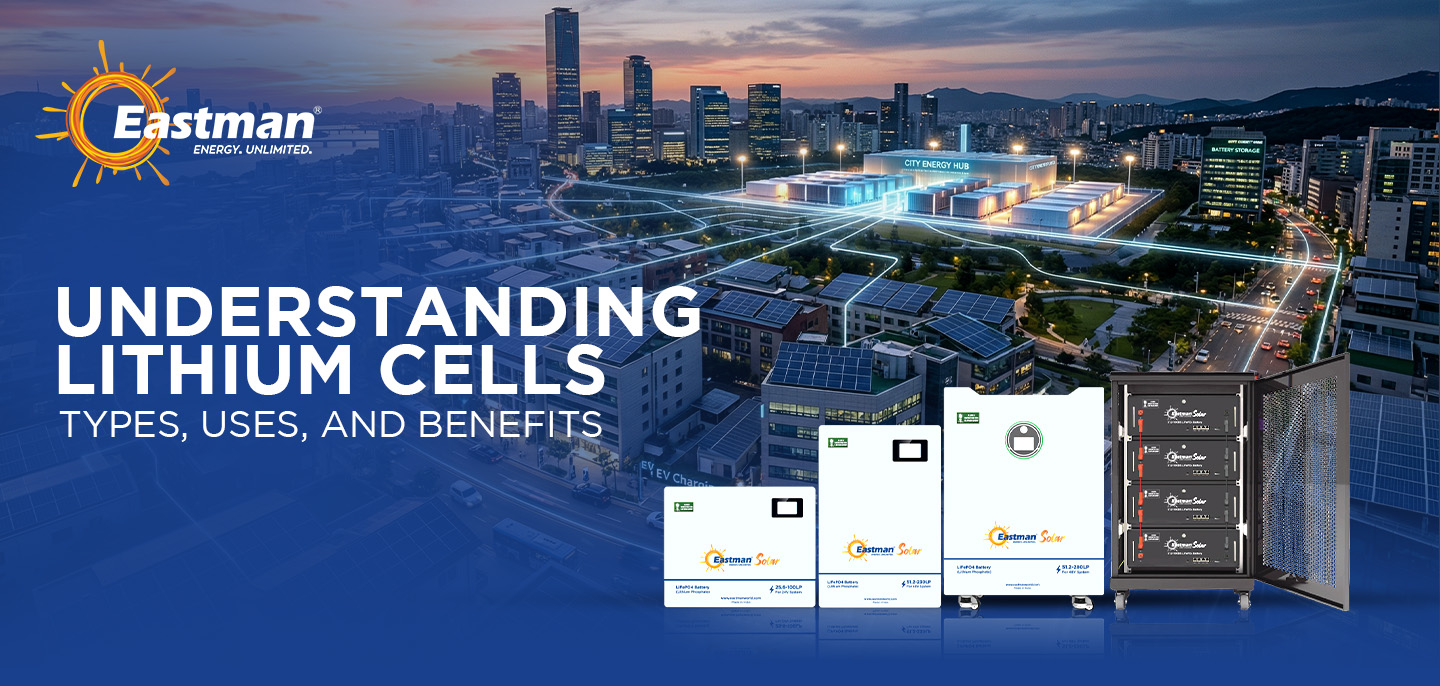
Understanding Lithium Cells: Types, Uses, and Benefits
In today’s increasingly electrified world, lithium cells form the backbone of modern battery technology. From powering smartphones and laptops to driving electric vehicles and storing renewable energy, lithium cells are transforming the way we store and use electricity.
What Are Lithium Cells?
Lithium cells are electrochemical units that store and release electrical energy using lithium ions. They act as the building blocks of larger lithium battery packs used in various devices and systems.
Each lithium cell typically contains:
- A lithium-based anode
- A metal oxide cathode
- An electrolyte, which allows lithium ions to move between the electrodes during charging and discharging
Compared with older battery technologies like lead-acid or nickel-cadmium batteries, lithium cells provide higher energy density, lighter weight, faster charging, and longer life cycles. These advantages make them ideal for modern portable devices and high-performance energy applications.
Types of Lithium Cells
Lithium cells are manufactured in different formats depending on their application and design requirements.
1. Cylindrical Cells
Cylindrical cells are one of the most widely used lithium cell types. Their robust metal casing makes them durable and easy to manufacture. They are commonly found in laptops, power tools, and some electric vehicles.
2. Prismatic Cells
Prismatic cells have a rectangular shape and are designed to maximize space efficiency. They offer higher capacity and are often used in electric vehicles and large energy storage systems, where compact and efficient design is important.
3. Pouch Cells
Pouch cells use a flexible aluminium laminate casing instead of a rigid metal shell. This design allows manufacturers to create thinner and lighter batteries, making them popular in smartphones, tablets, and compact electronics.
Applications of Lithium Cells
Because of their efficiency, reliability, and compact design, lithium cells are used across many industries:
- Electric Vehicles (EVs) – Supplying power for motors in hybrid and fully electric vehicles
- Consumer Electronics – Powering smartphones, laptops, tablets, and wearable devices
- Energy Storage Systems (ESS) – Storing solar and renewable energy for later use
- Medical Devices – Operating portable diagnostic equipment and critical healthcare tools
- Industrial Equipment – Supporting robotics, tools, automation systems, and sensors
Safety and Battery Management
While lithium cells offer many advantages, they must be handled and managed carefully. Issues such as overcharging, overheating, or physical damage can lead to a dangerous condition known as thermal runaway, where the battery may overheat or catch fire.
To prevent this, modern lithium battery systems include a Battery Management System (BMS). The BMS continuously monitors parameters like cell voltage, temperature, and current, ensuring the battery operates safely and efficiently.
Final Thoughts
Lithium cells are at the heart of today’s energy revolution. Their high efficiency, compact size, and long lifespan make them essential for powering everything from everyday electronics to electric vehicles and renewable energy systems.
As battery technology continues to evolve, lithium cells will remain a key driver in building a cleaner, smarter, and more energy-efficient future.
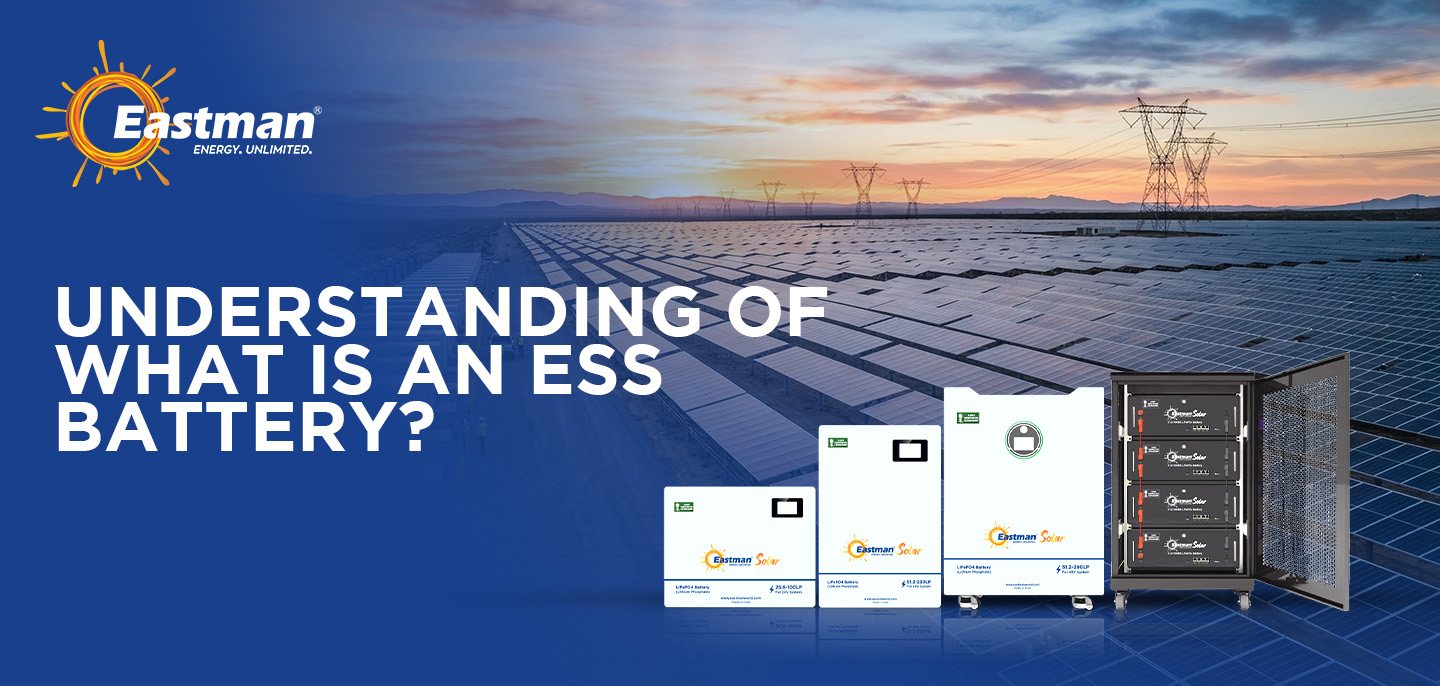
Understanding of what is an ESS Battery?
An Energy Storage System (ESS) battery is a technology designed to store energy and release it when needed. It plays a crucial role in modern energy management by improving the efficiency, reliability, and sustainability of electricity supply.
ESS batteries store excess energy generated from sources such as solar panels, wind turbines, or the electrical grid, and discharge it when demand increases or when power generation is low.
With the growing adoption of renewable energy, power generation has become more variable. ESS batteries help solve this challenge by balancing energy production and consumption, reducing energy waste, improving grid reliability, and ensuring continuous power availability.
Whether used in residential solar systems or large industrial power management, ESS batteries are transforming how energy is stored and utilized.
How ESS Batteries Work
An ESS battery stores energy during periods of low demand and releases it when demand increases. The process typically involves three main stages:
- Energy Capture (Charging Phase)
- The battery receives electrical energy from a power source such as solar panels, wind turbines, or the electrical grid.
- This energy is converted and stored inside the battery in chemical form.
2. Energy Storage (Idle Phase)
- The stored energy remains safely inside the battery until it is needed.
- Advanced Battery Management Systems (BMS) continuously monitor parameters such as battery health, temperature, voltage, and state of charge to ensure safe and efficient operation.
3. Energy Release (Discharging Phase)
- When electricity demand rises, the stored chemical energy is converted back into electrical energy.
- The power is delivered to homes, businesses, or the electrical grid.
- Energy is discharged in a controlled manner to maintain efficiency and protect the battery.
By performing these functions, ESS batteries improve energy resilience, grid stability, and support off-grid power solutions.
Types of ESS Batteries
Different battery technologies are used in energy storage systems. The choice depends on factors such as cost, efficiency, lifespan, and energy capacity.
1. Lithium-Ion Batteries
Lithium-ion batteries are the most widely used technology in modern ESS systems.
They offer:
- High energy density
- Long cycle life
- High efficiency
- Fast charging capability
- Low maintenance requirements
Because of these advantages, lithium-ion batteries are commonly used in residential energy storage systems, electric vehicles, and commercial backup solutions.
2. Lead-Acid Batteries
Lead-acid batteries are one of the oldest rechargeable battery technologies.
They are:
- Cost-effective
- Reliable
- Widely available
However, they have shorter lifespans, lower efficiency, and higher maintenance requirements compared to lithium-ion batteries. They are still used in applications where low initial cost is the primary concern.
3. Flow Batteries
Flow batteries use liquid electrolytes stored in external tanks, allowing energy storage capacity to be scaled easily.
They are particularly suitable for:
- Large-scale renewable energy storage
- Grid-level energy management
However, flow batteries generally require more space and infrastructure compared to lithium-ion systems.
4. Sodium-Ion Batteries
Sodium-ion batteries are emerging as a promising alternative to lithium-ion technology.
They use abundant and low-cost sodium instead of lithium, which helps reduce supply chain risks and production costs. These batteries are especially suitable for stationary energy storage and grid applications, although they are still in the early stages of commercial development.
5. Solid-State Batteries
Solid-state batteries replace the traditional liquid electrolyte with a solid electrolyte.
This technology offers potential advantages such as:
- Higher energy density
- Improved safety
- Longer lifespan
Solid-state batteries are considered a next-generation breakthrough that could significantly enhance both electric vehicles and advanced ESS systems in the future.
Advantages and Applications of ESS Batteries
Advantages of ESS Batteries
ESS batteries provide several benefits across residential, commercial, and industrial sectors.
They help maintain grid stability by balancing electricity supply and demand, preventing power fluctuations and blackouts. They also enable better integration of renewable energy sources like solar and wind, reducing dependence on fossil fuels.
Another major advantage is energy cost savings. Businesses and homeowners can store electricity when prices are low and use it during peak hours when electricity costs are higher.
Additionally, ESS batteries provide reliable backup power, ensuring that critical operations in hospitals, data centres, and industrial facilities continue even during power outages.
Applications of ESS Batteries
Renewable Energy Storage
ESS batteries are widely used for storing energy generated by solar and wind power systems.
Because renewable energy production depends on weather conditions, energy storage is essential for maintaining a stable and reliable power supply.
ESS batteries store excess energy when production is high and release it when production decreases.
Electric Vehicles and Charging Infrastructure
ESS batteries support the development of electric vehicle (EV) charging infrastructure and technologies such as Vehicle-to-Grid (V2G).
V2G systems allow electric vehicles to return stored energy to the grid during peak demand periods, helping stabilize the electricity network.
Grid-Scale Energy Storage
Utility companies use large-scale ESS systems to:
- Stabilize electricity grids
- Manage peak demand loads
- Prevent blackouts and voltage fluctuations
These systems are particularly useful for managing the intermittent energy generation of solar and wind farms.
Industrial and Commercial Applications
Many industries and commercial buildings use ESS batteries to optimize energy consumption and reduce electricity costs.
Factories, shopping malls, office buildings, hospitals, and data centers can store energy during off-peak hours and use it during high-demand periods.
ESS systems also serve as reliable backup power sources for critical operations.
Challenges and the Future of ESS Technology
Despite their advantages, ESS batteries still face several challenges.
Factors such as battery costs, raw material availability, and recycling processes impact the large-scale deployment of energy storage systems.
For example, lithium-ion batteries rely on minerals such as lithium, cobalt, and nickel, which can create supply chain and environmental concerns. Battery recycling and disposal also present environmental challenges.
However, ongoing advancements in solid-state batteries, sodium-ion batteries, and improved recycling technologies are expected to make energy storage systems more sustainable and efficient in the future
Why Choose Eastman for ESS Battery Solutions?
As demand for efficient and sustainable energy storage grows, choosing the right ESS battery provider becomes increasingly important.
As one of the leading lithium-ion battery manufacturers in India, Eastman offers high-performance, durable, and efficient energy storage solutions designed for residential, commercial, and industrial applications.
With advanced technology and reliable performance, Eastman ESS batteries help ensure stable power, improved energy efficiency, and long-term energy independence.
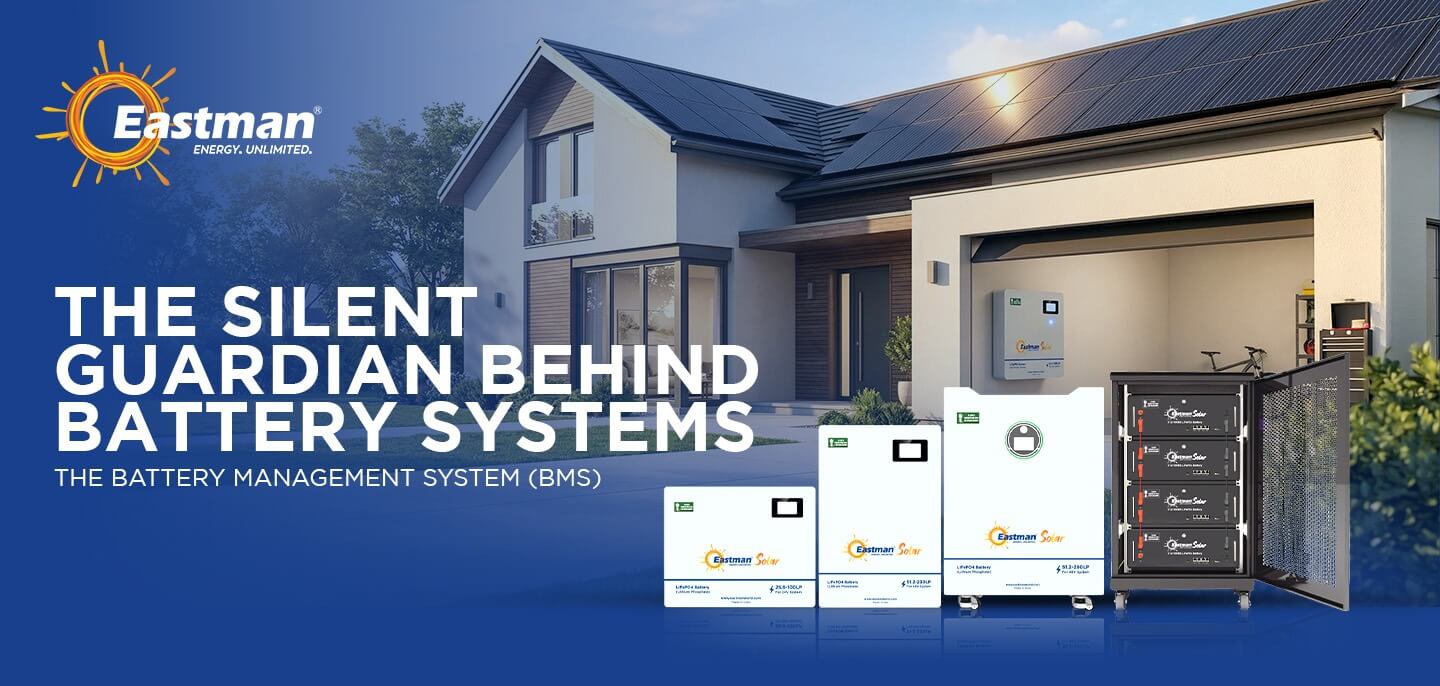
The Silent Guardian Behind Battery Systems – The Battery Management System (BMS)
The Critical Role of BMS in Optimizing Battery Performance
Understanding the Battery Management System (BMS)
When choosing the right battery for your application, lithium-ion batteries clearly outperform traditional lead-acid batteries. They are lighter, more efficient, charge faster, and offer a significantly longer lifespan.
However, lithium batteries are also more sensitive to operating conditions such as temperature, voltage, and current fluctuations. Without proper monitoring and protection, these factors can damage the battery or reduce its lifespan.
This is where the Battery Management System (BMS) plays a crucial role.
Think of the BMS as the “brain” of the battery. It constantly monitors and manages the battery pack to ensure it operates safely and efficiently. A BMS prevents issues like overcharging, deep discharging, overheating, and cell imbalance, which can otherwise lead to battery degradation or failure.
In addition, the BMS monitors temperature, checks connections, tracks energy flow, and estimates the remaining charge of the battery. In simple terms, it ensures maximum safety, optimal performance, and longer battery life.
How a Battery Management System Works
A BMS operates through a combination of sensors, controllers, and communication systems. These components work together to monitor key battery parameters such as:
- Voltage
- Current
- Temperature
- State of Charge (SOC)
Using intelligent algorithms, the BMS continuously analyzes this data and takes corrective actions before any problem occurs.
Key Functions of a BMS
1. Protection Against Unsafe Conditions
The BMS constantly monitors voltage and current to prevent overcharging or over-discharging, both of which can damage battery cells. Temperature sensors also detect overheating and adjust the charging or discharging process accordingly.
2. Cell Balancing
Lithium battery packs consist of multiple cells connected together. The BMS ensures that all cells charge and discharge evenly, preventing certain cells from becoming over-stressed or damaged.
3. Monitoring Battery Health
Over time, every battery gradually loses capacity. The BMS tracks this degradation and estimates the State of Health (SOH), helping users understand the remaining lifespan of the battery.
4. Data Reporting and Diagnostics
A BMS also acts as a diagnostic system, detecting faults and providing performance data that helps in maintenance and troubleshooting.
Why BMS is Critical for Battery Performance and Longevity
Whether it’s for solar energy storage, backup power systems, electric vehicles, or RV applications, battery reliability is essential.
Unexpected battery failure can occur due to issues such as:
- Short circuits
- High current loads
- Extreme temperatures
- Voltage fluctuations
A well-designed BMS prevents these problems by keeping the battery always operating within safe limits.
By monitoring battery health and optimizing charging cycles, a BMS can significantly extend the lifespan of the battery, reduce maintenance needs, and lower long-term replacement costs.
In essence, the BMS acts as both a protector and an intelligent manager, ensuring your battery system performs at its best.
Understanding the LFP Battery Life Cycle: 8,000 Cycles and 70% SOH
SOH vs. DOD in Lithium Iron Phosphate Batteries
Lithium Iron Phosphate (LFP) batteries are widely recognized for their long lifespan, safety, and reliability—especially in energy storage applications such as solar ESS, residential backup, and commercial power systems.
When evaluating LFP batteries, two durability benchmarks are commonly referenced:
- 8,000 cycles to 70% State of Health (SOH)
- 6,000 cycles at 80% Depth of Discharge (DOD)
At first glance, these figures may appear contradictory. However, they often describe the same underlying battery performance, expressed through different testing and usage perspectives.
Decoding the Benchmarks: SOH vs. DOD
8,000 Cycles to 70% SOH Explained
This benchmark defines battery life based on capacity retention. Typically tested at a 0.5P (or 0.5C) charge/discharge rate, one cycle represents a full charge and discharge of the battery’s usable capacity.
After 8,000 cycles, the battery is guaranteed to retain at least 70% of its original rated capacity.
- Metric type: Capacity-based
- Endpoint: 70% SOH
- Test condition: Standardized laboratory test
6,000 Cycles at 80% DOD Explained
This benchmark defines battery life based on a usage pattern rather than a capacity endpoint.
- Metric type: Usage-based
- Endpoint: Typically 70–80% SOH
- Test condition: High daily utilization
The Critical Insight: Same Battery, Different Test Conditions
These two specifications are not contradictory. In most cases, they describe the same LFP battery tested under different conditions.
A battery cycled daily at 80% DOD experiences higher stress, reaching 70% SOH in around 6,000 cycles. The same battery, tested under gentler standardized conditions, may reach 70% SOH after 8,000 cycles.
Why LFP Chemistry Supports Both Claims
1. Structural Stability
LFP batteries use a robust olivine crystal structure, which resists degradation during repeated cycles.
2. Predictable and Gradual Aging
LFP chemistry exhibits slow and linear capacity fade, making performance degradation predictable over time.
3. High Stress Tolerance
Compared to other lithium chemistries, LFP batteries tolerate wider operating conditions with minimal damage.
Practical Application: Choosing the Right Metric
For High Daily Energy Demand Systems
The 6,000 cycles at 80% DOD metric is the most realistic indicator for heavy usage.
For Moderate or Variable Usage Systems
The 8,000-cycle life to 70% SOH provides a broader durability reference.
The Universal Takeaway: Long Service Life
LFP batteries are engineered for long-term performance and exceptional durability, typically delivering 15–20+ years of service.
How to Maximize Your LFP Battery Life
- Right-size the system to keep usage below 80% DOD
- Avoid voltage extremes (20%–90% SOC)
- Maintain moderate operating temperatures
Two Specifications, One Durable Technology
The specifications of 8,000 cycles to 70% SOH and 6,000 cycles at 80% DOD are complementary indicators of the same robust LFP battery life cycle.
Home Energy Storage Batteries: Comparative Analysis of A-Grade and B-Grade Lithium Battery Cells
Home energy storage systems are becoming an essential part of modern households. They help balance power demand, provide reliable backup during outages, and maximize the use of renewable energy sources such as solar and wind.
By storing excess energy and using it when required, homeowners can reduce dependence on the grid, optimize energy consumption, and significantly lower electricity bills.
At the core of every home energy storage system lies the lithium battery. The quality of the lithium battery cells used directly impacts system efficiency, safety, lifespan, and overall reliability.
Among these cells, A-grade and B-grade lithium battery cells are commonly discussed. Understanding the difference between them is crucial when choosing the right battery for your home energy storage needs.
Understanding A-Grade and B-Grade Lithium Battery Cells
Lithium battery cells are classified into grades based on their performance, consistency, and manufacturing quality. Although grading standards may vary slightly by manufacturer, the fundamental differences between A-grade and B-grade cells are well recognized across the energy storage industry.
Key Differences Between A-Grade and B-Grade Battery Cells
1. Capacity and Energy Density
A-Grade Lithium Battery Cells: Offer high capacity and superior energy density with consistent output.
B-Grade Lithium Battery Cells: Have reduced capacity and may not deliver full rated performance consistently.
2. Cycle Life
A-Grade Cells: Long cycle life with thousands of charge/discharge cycles.
B-Grade Cells: Shorter lifespan and faster degradation.
3. Self-Discharge Rate
A-Grade Cells: Low self-discharge rate, retain energy longer.
B-Grade Cells: Higher self-discharge, lose energy faster.
4. Safety Performance
A-Grade Battery Cells: Better thermal stability and safety features with advanced BMS integration.
B-Grade Battery Cells: Lower safety margins, higher risk under extreme conditions.
5. Manufacturing Quality and Consistency
A-Grade Cells: Strict quality control, uniform performance.
B-Grade Cells: Performance variation due to less strict quality checks.
6. Certifications and Standards
A-Grade Lithium Battery Cells: Comply with UL, CE, IEC, BIS standards.
B-Grade Lithium Battery Cells: May lack full certification compliance.
7. Cost and Market Application
A-Grade Cells: Higher upfront cost but better long-term value.
B-Grade Cells: Lower initial cost but higher maintenance and replacement costs.
A-Grade vs B-Grade Battery Cells: Quick Comparison
| Feature | A-Grade Cells | B-Grade Cells |
|---|---|---|
| Capacity Consistency | High | Moderate |
| Cycle Life | Long | Shorter |
| Safety | High | Moderate |
| Self-Discharge | Low | Higher |
| Reliability | Excellent | Variable |
| Ideal Use | Home & Solar ESS | Low-demand Applications |
Which Battery Grade Is Best for Home Energy Storage?
For residential energy storage systems—especially solar-based solutions—A-grade lithium battery cells are the preferred choice. They offer reliable performance, enhanced safety, longer service life, and better return on investment.
Although B-grade cells may appear economical initially, their shorter lifespan and lower reliability often make them unsuitable for long-term home energy storage applications.
