
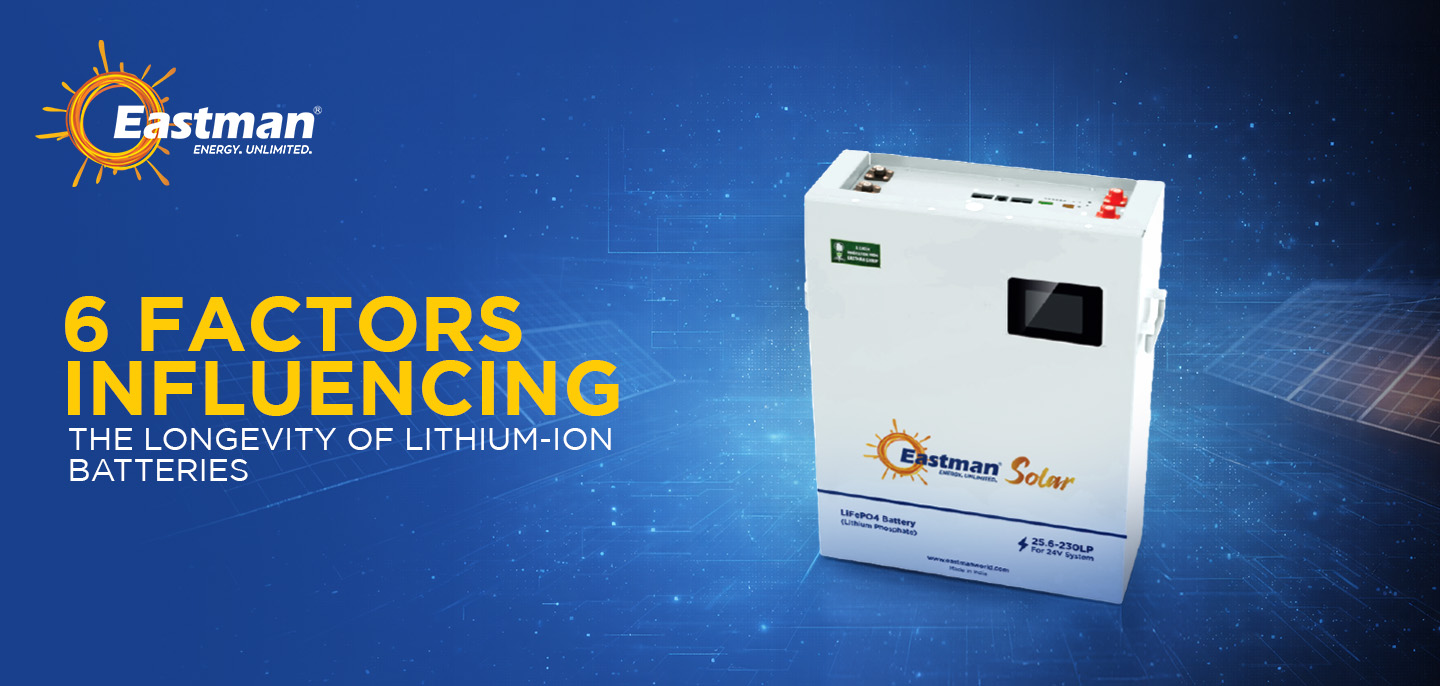
6 Factors Influencing the Longevity of Lithium-ion Batteries
Lithium-ion batteries have transformed the energy storage landscape and now play a vital role across multiple applications, including portable electronics, electric vehicles, and renewable energy systems. In India’s rapidly expanding solar energy sector, lithium-ion batteries are increasingly used to store and efficiently utilize solar power.
Understanding the factors that influence the longevity of lithium-ion batteries is essential for maximizing performance, reliability, and return on investment. This article explores six key factors that directly impact the lifespan of lithium-ion batteries, with particular emphasis on their use in solar energy storage systems.
1. Depth of Discharge (DoD)
Depth of Discharge (DoD) indicates how much of a battery’s total capacity is used before it is recharged. Regularly discharging a battery to very low levels can significantly shorten its lifespan.
For optimal battery health and longevity, maintaining a DoD between 20% and 80% is recommended. This factor is especially important in solar applications, where batteries often undergo daily charge-discharge cycles. Reducing deep discharges helps minimize internal stress and prolong overall battery life.
2. Operating Temperature
Temperature has a major influence on both the performance and lifespan of lithium-ion batteries. Exposure to extreme heat accelerates chemical reactions inside the battery, leading to faster degradation and reduced capacity.
On the other hand, extremely low temperatures can limit the battery’s ability to deliver power efficiently. Maintaining batteries within the manufacturer-recommended temperature range is critical, particularly in solar installations where ambient conditions can vary significantly.
3. Charging Patterns
Charging behavior plays a crucial role in determining battery longevity. While fast charging offers convenience, frequent rapid charging can place additional stress on battery cells and accelerate aging.
In solar energy systems, slow and consistent charging throughout the day is generally more beneficial. Modern solar inverters and charge controllers use advanced charging algorithms that dynamically adjust charging rates based on solar availability, battery state of charge, and temperature.
These intelligent systems help optimize battery health and extend service life.
4. Quality of Battery Components
The materials and manufacturing processes used in lithium-ion batteries have a direct impact on their durability and lifespan. High-quality batteries use premium electrodes, separators, and electrolytes that are more resistant to wear, chemical degradation, and thermal stress.
Choosing batteries from reputable manufacturers ensures better performance, higher safety standards, and longer operational life.
5. Battery Management System (BMS)
A robust Battery Management System (BMS) is essential for maximizing the longevity of lithium-ion batteries. The BMS continuously monitors and controls critical parameters such as voltage, current, and temperature at the cell level.
By preventing overcharging, over-discharging, short circuits, and thermal runaway, the BMS ensures safe operation and helps maintain optimal battery health throughout its lifecycle.
6. Usage Patterns and Cycling
Battery usage frequency and cycling intensity significantly influence longevity. Lithium-ion batteries are designed for a specific number of charge-discharge cycles, after which their usable capacity gradually declines.
Capacity degradation is influenced by factors such as DoD, temperature, and charging behavior. Balanced and moderate usage patterns can significantly extend battery life.
Maximizing Lithium-ion Battery Longevity in Solar Applications
To achieve the best performance and lifespan from lithium-ion batteries in solar energy systems, consider the following best practices:
- Implement smart energy management systems that optimize battery usage based on solar generation and energy demand.
- Ensure proper installation with adequate ventilation and effective temperature control.
- Use high-quality, solar-specific lithium-ion batteries from trusted manufacturers.
- Conduct regular monitoring and performance checks to detect issues early.
- Slightly oversize the battery bank to reduce the average depth of discharge.
- Educate users on correct battery operation and long-term care practices.
Conclusion
Understanding and managing the factors that influence the longevity of lithium-ion batteries is key to maximizing the benefits of solar energy storage systems.
By controlling depth of discharge, maintaining proper temperature conditions, adopting optimized charging patterns, selecting high-quality components, relying on advanced battery management systems, and following balanced usage practices, users can significantly extend battery life and enhance overall system performance.
As India’s solar energy ecosystem continues to evolve, staying informed about battery technology advancements and best practices will be essential for leveraging lithium-ion batteries as a reliable, efficient, and future-ready energy storage solution.
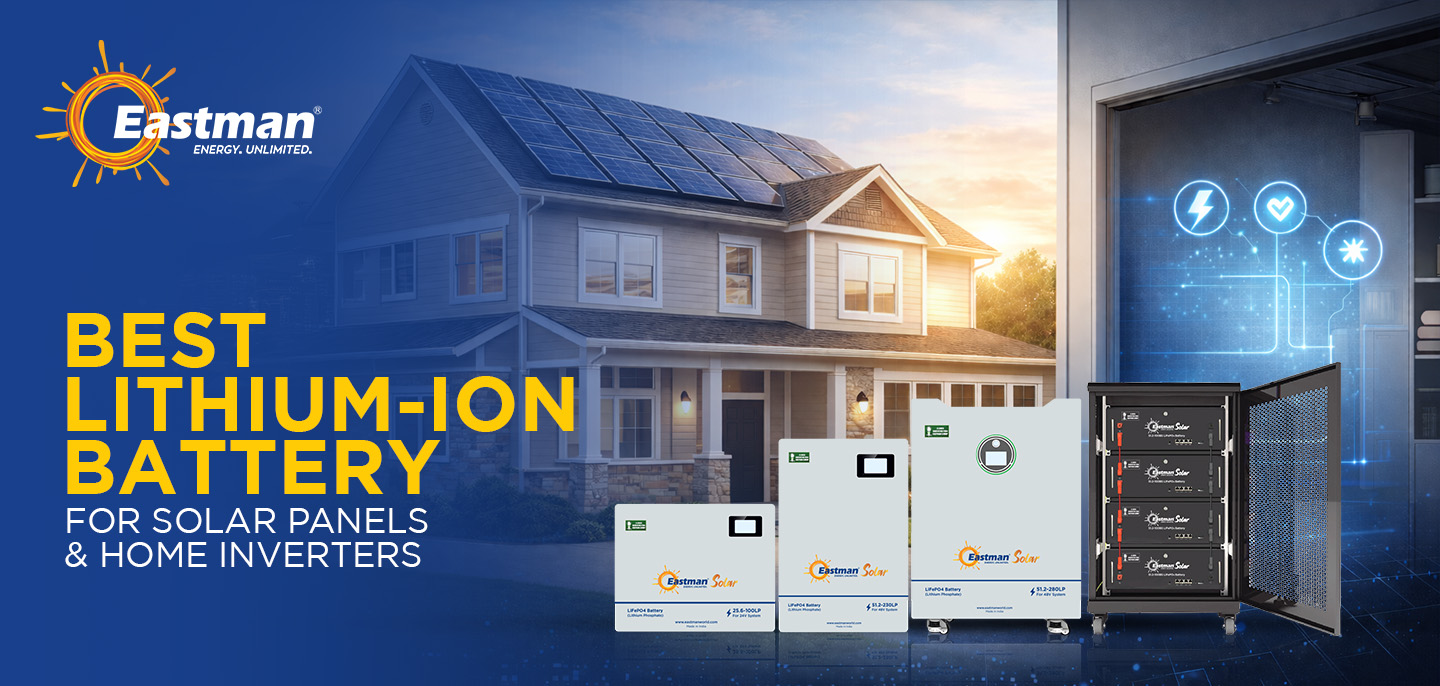
Best Lithium-Ion Battery for Solar Panels & Home Inverters
The Demand for Efficient and Reliable Energy Storage
The demand for efficient and reliable energy storage solutions has grown exponentially in recent years, driven by the increasing adoption of solar power for both residential and commercial applications. Among the available technologies, lithium-ion battery have emerged as the most trusted and preferred choice for solar panels and home inverters.
With their extended lifespan, compact design, and superior performance, lithium-ion batteries provide the ideal balance between long-term cost savings and uninterrupted power supply.
Why Lithium-Ion Batteries Are the Top Choice
When integrated with solar panels, lithium-ion batteries enable effective storage of solar energy for use during evenings, nighttime, or power outages. A lithium-ion battery solar system offers a higher depth of discharge, faster charging, and significantly longer service life compared to conventional battery technologies.
These advantages not only reduce dependence on grid electricity but also help lower monthly electricity bills. In addition, lithium-ion batteries are lightweight and compact, making them easy to install in homes, offices, and commercial spaces without requiring large battery rooms or frequent servicing.
Benefits of Lithium-Ion Battery
- Low Maintenance: Lithium-ion battery require minimal maintenance compared to traditional lead-acid batteries, eliminating the need for water topping and routine inspections.
- High Load Compatibility: These batteries are fully compatible with modern inverters and deliver consistent performance even under heavy loads. They can safely power household appliances, computers, and air conditioners with reliability.
- Fast Charging & High Efficiency: Lithium-ion batteries charge quickly and offer high energy efficiency, making them ideal for days with limited sunlight and fluctuating power availability.
Understanding the Cost of Lithium-Ion Batteries
A common concern among buyers is the upfront cost of lithium-ion batteries. While the initial investment is higher than that of lead-acid batteries, lithium-ion solutions prove to be more cost-effective over time.
Their long lifespan, durability, and low maintenance requirements result in fewer replacements and lower servicing costs, ensuring dependable performance without frequent upkeep.
Lithium-Ion Battery Solar Solutions for Homes
For residential users, installing a lithium-ion battery solar system ensures optimal utilization of renewable energy. Excess electricity generated during the day can be stored and used later, significantly reducing reliance on the power grid.
This is particularly beneficial in areas prone to frequent power cuts, providing households with continuous energy access while promoting sustainable and eco-friendly living.
Key Factors to Consider Before Purchasing
- Energy Requirements: Assess your daily power consumption and select a battery capacity that meets your needs.
- Space and Installation: Take advantage of the compact and space-saving design of lithium-ion batteries when planning installation.
- Quality Standards: Compare products and manufacturers based on quality certifications and international standards. Trusted brands such as Eastman offer globally approved lithium-ion solutions.
- System Compatibility: Ensure the lithium-ion battery is compatible with your existing inverter and solar panel system before making a purchase.
Conclusion
Lithium-ion batteries have set a new benchmark in solar energy storage. Whether used in a lithium-ion battery inverter, evaluated based on lithium-ion battery cost, or integrated into a complete lithium-ion battery solar system, they deliver unmatched efficiency, reliability, and long-term savings.
For homes and businesses seeking to maximize solar energy utilization, lithium-ion batteries represent a smart, sustainable, and future-ready energy solution.
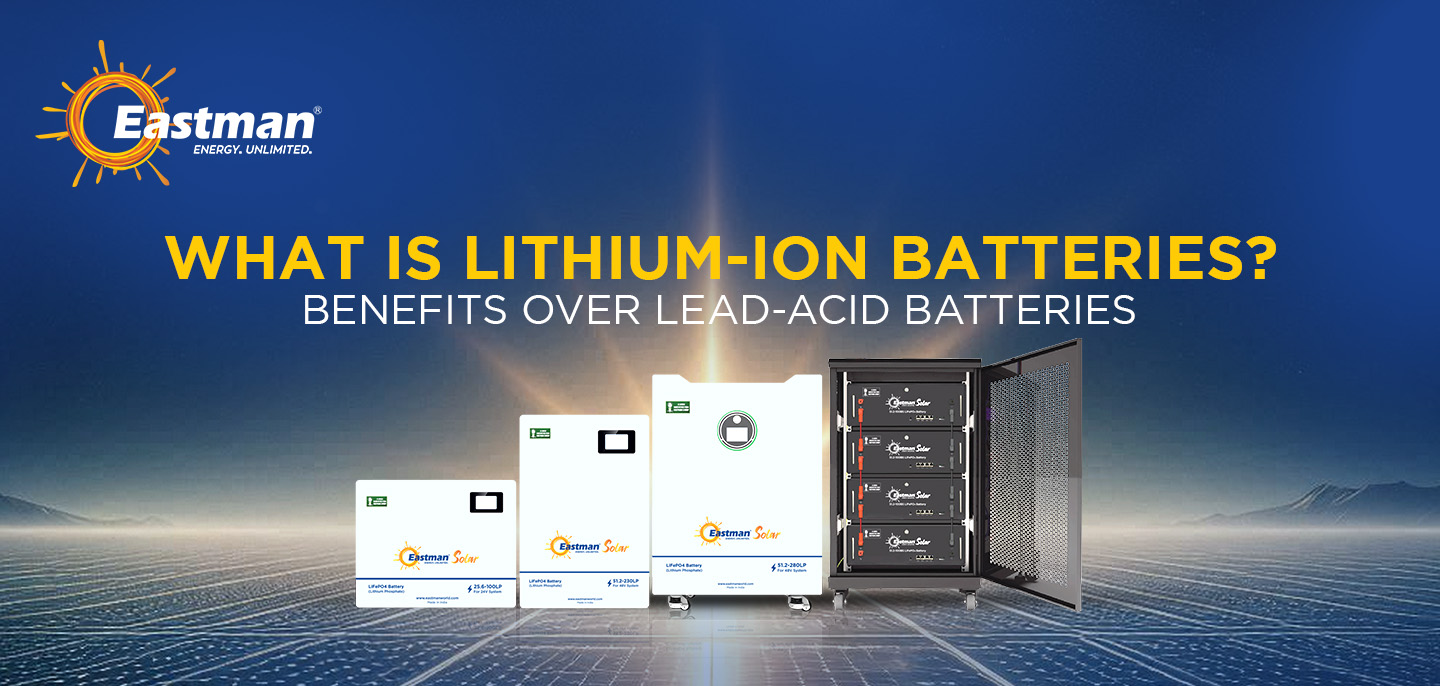
What Are Lithium-ion Batteries? Benefits Over Lead-acid Batteries
Energy storage has emerged as a critical pillar supporting the renewable energy revolution, particularly in applications such as rooftop solar systems, electric mobility, and power backup solutions. Among the various energy storage technologies available today, lithium-ion batteries—especially those supplied by leading lithium-ion battery companies in India—are widely recognized for their efficiency, reliability, and long service life.
Understanding Lithium-ion Batteries
Lithium-ion batteries are rechargeable energy storage systems in which lithium ions move between the cathode and anode during charging and discharging cycles. This controlled movement of ions enables highly efficient energy storage and release. Due to these advantages, lithium-ion batteries are extensively used in smartphones, laptops, electric vehicles (EVs), renewable energy systems, and lithium-ion–based inverters.
Compared to lead-acid batteries, which use lead plates and liquid electrolytes, lithium-ion battery packs are significantly lighter, more compact, and far more resilient. Depending on the application, lithium-ion batteries are available in several chemistries, including:
- Lithium Iron Phosphate (LFP): Known for high safety, excellent thermal stability, and long cycle life. LFP batteries are widely used in solar energy storage systems and EV charging stations.
- Lithium Nickel Manganese Cobalt (NMC): Offers higher energy density, making it ideal for space-constrained applications such as electric vehicles.
- Lithium Cobalt Oxide (LCO): Provides high energy storage capacity and is commonly used in portable electronic devices.
- Lithium Titanate (LTO): Supports ultra-fast charging and exceptional durability, making it suitable for demanding industrial applications.
Lead-acid Batteries: Limitations
Lead-acid batteries store energy using lead plates immersed in a liquid electrolyte. While they are relatively inexpensive and commonly used in conventional inverters and vehicles, they come with several drawbacks. These batteries are heavy, have low energy density, require frequent maintenance, and offer a comparatively short lifespan. Due to these limitations, lithium-ion technology is increasingly preferred for modern energy storage applications.
Benefits of Lithium-ion Batteries Over Lead-acid Batteries
1. Higher Energy Density
Lithium-ion batteries store more energy in a smaller volume, making them lighter and more compact. Their reduced size and weight make them easier to install and transport, especially in solar power systems and inverter applications where space is limited.
2. Longer Lifespan
While lead-acid batteries typically last 2–4 years, lithium-ion batteries can operate efficiently for 8–10 years or more, depending on usage conditions. Their extended lifespan and durability result in fewer replacements over time, making them a more cost-effective solution in the long run.
3. Faster Charging
Lithium-ion batteries charge 3–4 times faster than lead-acid batteries. This rapid charging capability is especially beneficial for solar energy storage systems, ensuring reliable power availability during nighttime or cloudy conditions and supporting uninterrupted power supply requirements.
4. Enhanced Efficiency
Lithium-ion batteries deliver approximately 90–95% of the stored energy, compared to only 70–80% in lead-acid batteries. This higher efficiency means minimal energy loss and better utilization of generated solar power.
5. Low Maintenance
Lead-acid batteries require regular water topping, ventilation checks, and careful handling. In contrast, lithium-ion batteries are virtually maintenance-free and are equipped with advanced Battery Management Systems (BMS) that continuously monitor safety, performance, and health.
Conclusion
Lithium-ion technology represents the future of energy storage. Compared to lead-acid batteries, lithium-ion solutions offer superior efficiency, longer service life, faster charging, and minimal maintenance. With multiple chemistry options available, users can select lithium-ion batteries that best suit their specific requirements. From residential solar installations to lithium-ion batteries for inverters and industrial applications, trusted lithium-ion battery suppliers such as Eastman deliver reliable performance, extended longevity, and a cleaner, greener future.
Customer Service: The Real Power Behind Solar Rooftop Solutions
Why is Customer Service Important in Solar Rooftop Solutions?
In today’s world, where clean energy is becoming a necessity, solar rooftop solutions have emerged as a smart and sustainable choice for homeowners and businesses. But while solar panels and inverters do the job of harnessing energy from the sun, it’s the quality of customer service that truly powers the overall experience. From the first consultation to long-term maintenance, excellent customer support is essential, especially in emerging markets like the Middle East and Africa, where many users are new to solar technology.
Let’s explore why customer service is the backbone of a successful solar rooftop solution.
Guidance in Choosing the Right System
Not all rooftops or energy requirements are the same. One of the first roles of a good customer service team is to provide expert consultation and load analysis. By understanding the customer’s daily energy consumption, rooftop space, and budget, the service team can suggest the most appropriate solution—be it on-grid, off-grid, or hybrid. This guidance prevents under-sizing or overinvestment and sets the foundation for a successful installation.
Smooth Installation Experience
Installing a solar rooftop system involves several steps: structural assessment, electrical connections, safety compliance, and sometimes government approvals. A proactive customer service team ensures smooth coordination between engineers, electricians, and installers, while keeping the customer informed at every stage. This creates a stress-free and timely installation experience.
After-Sales Support & Troubleshooting
A solar system is a long-term investment, typically lasting 20 to 25 years. Over this time, users may encounter issues like inverter errors, sudden shutdowns, or reduced energy generation. Responsive customer service makes all the difference. Quick troubleshooting, remote diagnostics, and timely technical support help maintain consistent performance and user confidence.
Performance Monitoring & Warranty Claims
Most modern solar systems offer real-time performance tracking through apps or web dashboards. However, not all users are familiar with technical data. Customer service plays a crucial role in helping users interpret energy reports, identify efficiency drops, and take corrective action. In the case of equipment failures, the service team should also manage hassle-free warranty claims and replacements, ensuring minimal downtime.
Customer Education & Maintenance Tips
Educating customers about basic maintenance, such as when to clean solar panels, how to monitor inverter lights, or how to conserve energy, can significantly improve system longevity. Good customer service includes training and easy-to-understand guides that empower users to manage their systems independently.
Building Brand Reputation & Referrals
Happy customers become brand ambassadors. When users have a positive post-sales experience, they’re more likely to recommend the brand to friends, family, or social networks. This kind of organic promotion builds trust and enhances brand credibility, especially in local markets where word-of-mouth matters.
Handling Complaints or Escalations Professionally
Even with the best products, issues may arise. What truly defines a good company is how they respond when things go wrong. Prompt, respectful, and transparent handling of complaints or escalations ensures customer satisfaction and brand loyalty. A professional service team can turn a negative experience into a long-term relationship.
Importance of Customer Service in Emerging Markets (Middle East & Africa)
In Middle Eastern and African countries, solar adoption is growing rapidly, but many customers are first-time users. They require more education, local language support, and trusted service advisors. In these regions, excellent customer service isn’t just a bonus, it’s a necessity. It builds trust, encourages adoption, and ensures the system is used effectively in the long term.
Eastman’s Customer-First Approach in Solar Rooftop Solutions
Delivering a quality solar rooftop system goes far beyond installation it’s about building lasting relationships through exceptional customer service. Our dedicated support team is trained to assist customers at every stage, from system selection and installation to long-term maintenance and performance monitoring. With a strong presence in India, the Middle East, and Africa, Eastman ensures local, responsive service through trained technicians, timely troubleshooting, and proactive guidance.
Eastman is committed to making the solar journey seamless, transparent, and worry-free because we know that great service is the real power behind solar energy.
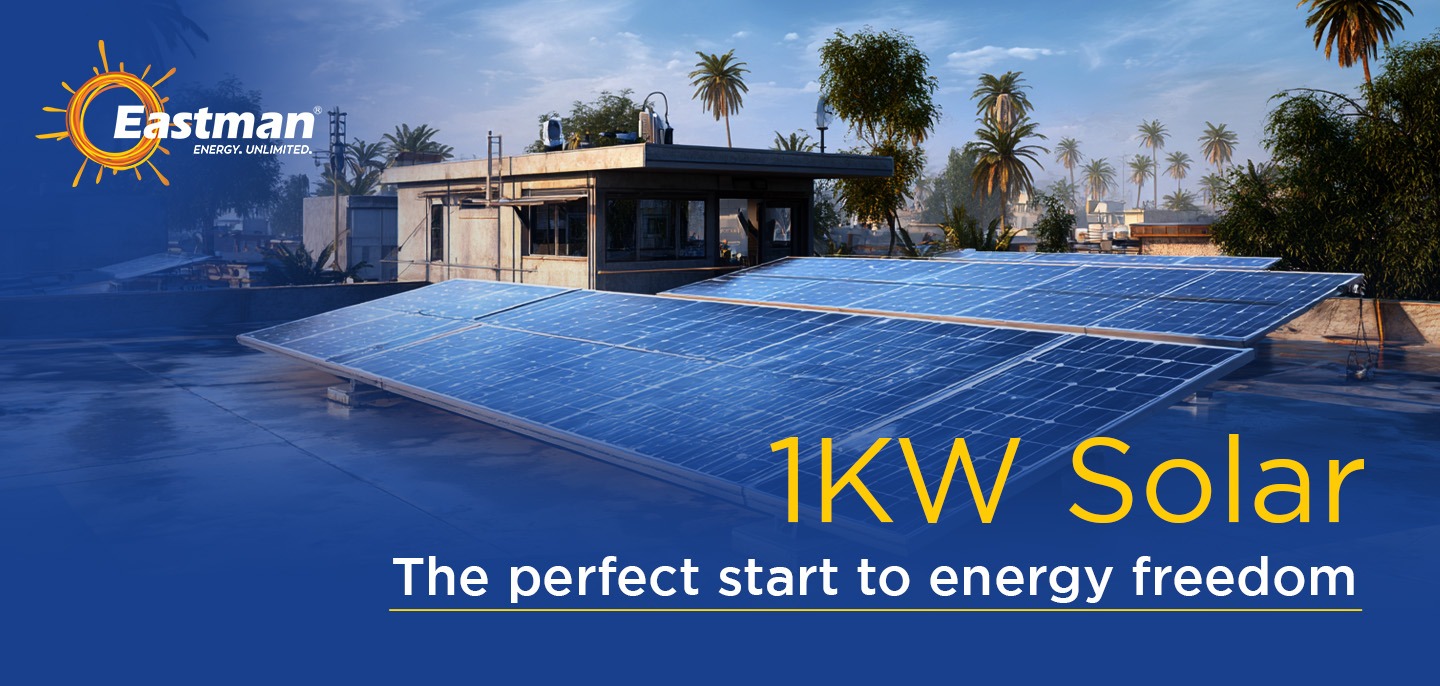
1KW Solar: The perfect start to energy freedom
What Can You Really Power with a 1KW Solar System?
Thinking about switching to solar? A 1KW solar system is a great way to begin your clean energy journey. It's compact, affordable, and perfect for small homes, shops, or offices looking to reduce electricity bills and become energy independent.
In this blog, we will give you a complete overview of what a 1KW system can do, what it includes, and how you can benefit especially in the sun-rich regions of the Middle East and Africa.
What Can You Run with a 1KW Solar System?
A 1KW system can generate around 4 to 5 units (kWh) of electricity per day, depending on sunlight conditions. Here's what it can typically power:
- 3-4 LED lights
- 3-4 ceiling/table fans
- 1 LED TV
- 1 small refrigerator (energy-efficient)
- Mobile and laptop charging
- Wi-Fi router
Note: Running heavy appliances like air conditioners, washing machines, or water heaters on a 1KW system is not recommended.
What Equipment Do You Need for a 1KW Solar System?
To build a fully functional 1KW solar setup, you'll need the following components:
1. Solar Panels (PV Modules)
- Typically, 3-4 panels of 330W each
- Total: ~1000W output capacity
2. Solar Inverter
- Converts DC from panels into AC electricity
- Choose from off-grid, grid-tie, or hybrid inverters
3. Battery (Optional but Recommended)
- Stores excess solar power for use during night or power cuts
- 12V, 100Ah-150Ah recommended
4. Charge Controller
- Regulates voltage/current from solar panels to battery (if not integrated with inverter)
5. Mounting Structures & Wiring
- Durable, weatherproof mounting for panels
- Copper wiring, conduit, connectors, and safety fuses
Scenario with Battery: Power Day & Night
Including a battery in your 1KW system ensures uninterrupted power, especially in regions with:
- Frequent power cuts
- No grid access
- Night-time energy requirements
A 12V 150Ah battery can store around 1.8 kWh of energy, enough to run your essential appliances for 4-6 hours after sunset.
Pro Tip: In off-grid areas across Africa and remote parts of the Middle East, a 1KW system with battery backup is ideal for ensuring energy self-reliance.
Things to Keep in Mind While Installing a 1KW Solar System
- Rooftop Space: You will need approx. 80-100 sq. ft. of shade-free space.
- Sunlight Access: Panels should face the sun for maximum exposure (south-facing in northern hemisphere).
- System Type: Choose grid-tie if you want to reduce bills, off-grid if there's no grid access, or hybrid for the best of both.
- Local Compliance: Ensure your installer follows local electrical codes and safety standards.
- Professional Installation: Always hire certified technicians to avoid performance or safety issues.
Return on Investment (ROI):
- Save ~$10-$15 per month on electricity
- Payback period: 5-6 years
- System lifespan: 20-25 years
- Maintenance cost: Minimal
Why It's Perfect for Middle East & Africa
With abundant sunshine and growing energy demand, a 1KW solar system is a smart, scalable, and affordable solution for homes, clinics, schools, and small businesses in countries like Saudi Arabia, UAE, Egypt, Nigeria, Kenya, and South Africa.
Whether you are in a bustling city or a remote village, Eastman's reliable solar solutions help you harness the power of the sun efficiently and affordably.
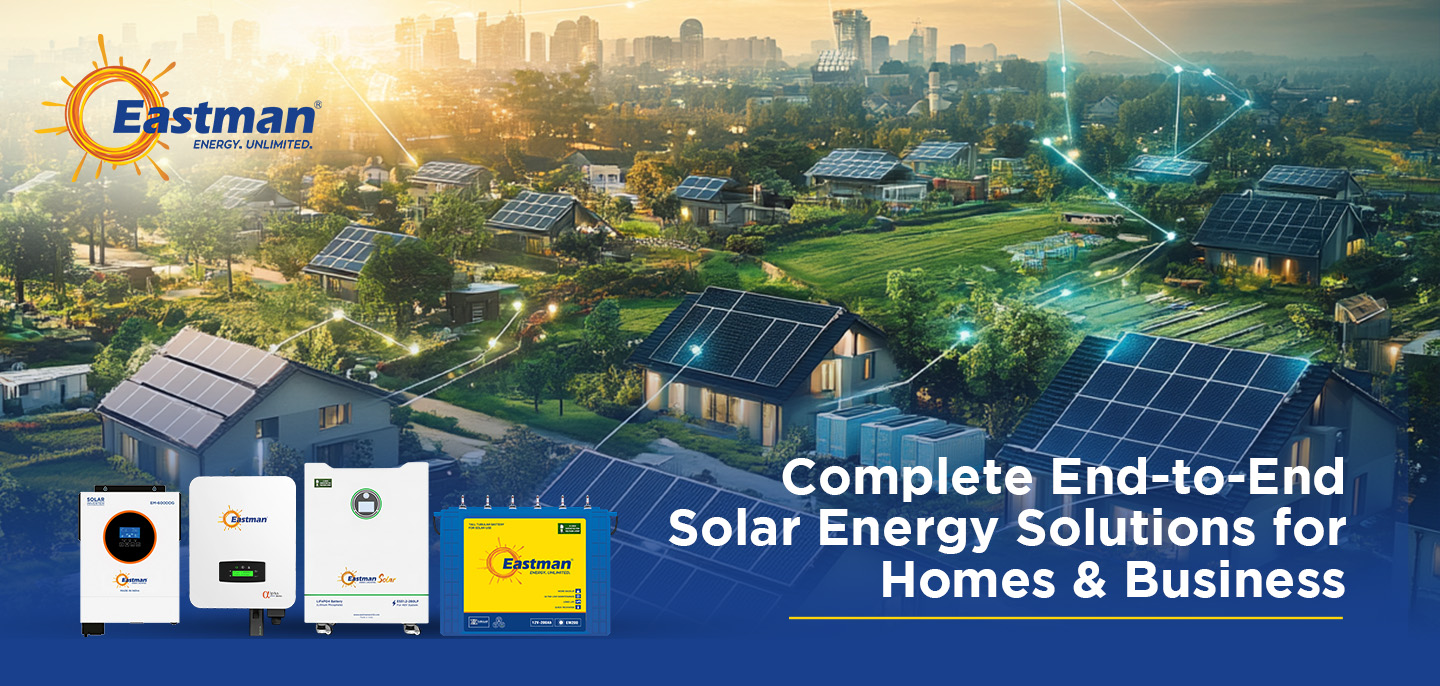
Complete End-to-End Energy Solutions for Homes & Business
As the world rapidly shifts toward clean energy, the need for reliable, integrated solar solutions is more critical than ever. Eastman emerges as a ONE-STOP SOLUTION for every Solar need, offering end-to-end solar energy products that seamlessly integrate solar panels, inverters, and batteries, even when sourced from multiple manufacturers.
In today’s fragmented solar market, buyers often end up juggling inverters from one brand, panels from another, and batteries from a third, leading to performance mismatches, incompatible warranties, and operational hiccups.
Eastman simplifies solar adoption by delivering a complete solar ecosystem, managing everything from design and engineering to deployment and after-sales service. It eliminates complexity by serving as a single-window solution, ensuring system compatibility, peak performance, and comprehensive support.
A Complete Solar Ecosystem Under One Roof
Eastman’s comprehensive product portfolio includes:
Solar Inverters by Eastman
- Off-Grid Inverters: Designed for remote areas or homes with unreliable power supply.
- Grid-Tie Inverters: Enables excess solar power to be exported to the grid.
- Hybrid Inverters: Combines the best of both worlds. Ideal for solar + battery setups.
Solar Battery Solutions
- Lithium-ion Batteries: Smart, long-lasting, compact, perfect for modern homes and businesses.
- Tubular Lead-Acid Batteries: Robust and cost-effective, ideal for high-temperature zones and rural areas.
Together, these solutions deliver energy independence, backup power, and long-term cost savings for residential, commercial, and industrial users alike.
Backed by Strong In-House Manufacturing Capabilities
At the core of Eastman’s reliability is its vertically integrated manufacturing infrastructure that enables exceptional quality control, faster innovation, and consistent delivery.
- 4 Power Electronics Manufacturing Facilities: Producing high-performance inverters and controllers.
- 3 Lead-Acid Battery Manufacturing Units: Known for reliability, endurance, and affordability.
- 1 Lithium-ion Battery Manufacturing Plant: Delivering the future of compact and smart energy storage.
This in-house ecosystem maintains tight control over quality and supply chains, reduces lead times, and enables rapid innovation based on customer feedback and market demands.
Made in India, Trusted Worldwide
Eastman is proud to align with the "Make in India" initiative, reinforcing its commitment to national growth while competing on a global stage. Every Eastman product reflects:
- Locally Designed Precision Engineering
- World-Class Quality Benchmarks
- Competitive Pricing Backed by Local Manufacturing
This approach not only supports job creation and self-reliance but also ensures global customers benefit from best-in-class solar solutions.
Global Vision: Focus on Middle East & Africa
With growing solar demand in emerging markets, Eastman is accelerating solar adoption across the Middle East and Africa through:
- Tailored energy systems suited for high-temperature conditions
- Localised service and faster support
- Affordable, scalable solar infrastructure for both urban and off-grid communities
By providing affordable, reliable, and scalable solar energy systems, Eastman is playing a vital role in the energy transformation across these emerging markets.
Driving the Future of Green Energy Adoption
At Eastman, sustainability isn't just a trend but a guiding principle, a core mission. Every product, solution, and service are designed to accelerate the shift toward clean energy by building a greener future through:
- Minimising dependency on fossil fuels
- Making solar power accessible in underserved and remote regions
- Supporting global efforts toward achieving net-zero emissions
Whether it's a rural home seeking reliable backup or a large enterprise committed to reducing its carbon footprint, Eastman delivers solutions that empower a cleaner, greener tomorrow.

Inside Eastman's Global Distribution Network Expanding to 140+ Countries
In an era where global presence defines the success of industrial brands, Eastman has emerged as a powerful name in energy solutions, expanding its footprint to over 140 countries across six continents. From the bustling markets of Asia to the growing energy demands in Africa and the evolving infrastructure of Latin America, Eastman’s global distribution network ensures that reliable power is never out of reach. This blog takes a closer look at how Eastman built and continues to scale one of the most efficient, responsive, and widespread battery distribution systems in the world.
Eastman is a leading manufacturer of advanced energy storage solutions, specializing in innovative batteries and power systems that serve residential, commercial, and industrial applications. Renowned for its commitment to quality, sustainability, and customer satisfaction, Eastman has grown from a national brand into a global energy partner. With a strong focus on R&D and thermal management technologies, Eastman delivers high-performance batteries that are trusted in over 140 countries empowering homes, businesses, and critical infrastructure projects around the globe.
A Network Engineered for Reach and Reliability
Eastman's international expansion didn’t happen overnight it’s the result of strategic planning, local partnerships, and a deep understanding of regional energy needs. The company’s distribution model is built on a decentralized yet coordinated approach that leverages regional warehouses, trained service engineers, and country-specific compliance teams. This ensures fast delivery times, localized technical support, and seamless after-sales service across time zones.
Local Presence, Global Strength
From Lagos to Luxor, Eastman operates with a local-first mindset. Its sales and service networks in countries like Nigeria, Yemen, Bangladesh, and Nicaragua are customized to meet local power challenges — whether it’s frequent blackouts, extreme temperatures, or fuel shortages. Eastman invests in training local teams, enabling distributors with the right tools and knowledge to serve their markets effectively. This localized support network has been instrumental in building trust and ensuring customer satisfaction at every level.
Powered by Innovation and Sustainability
Beyond distribution, Eastman is focused on building a future-ready infrastructure. Its commitment to sustainability is reflected not just in the products — which include recyclable batteries and energy-efficient systems but also in its supply chain. Eastman’s distribution channels are optimized to reduce carbon footprint, streamline inventory flow, and improve energy access for underserved regions.
What’s Next?
With a clear roadmap to expand into emerging markets and strengthen existing partnerships, Eastman continues to set benchmarks in global energy distribution. As the world transitions to more renewable and efficient power solutions, Eastman’s expansive distribution network positions it as a vital player in the global energy landscape.

How Eastman Energizes Small Businesses in Africa?
Introduction
In many regions of Africa, the backbone of economic activity is driven by small and medium-sized enterprises (SMEs). From bustling barbershops in Lagos to street-side food vendors in Nairobi, these businesses power daily life, support families, and fuel local economies.
Yet one challenge consistently threatens their productivity is unreliable access to electricity.
At Eastman, we believe that energy is not just a utility it’s a catalyst for progress. That’s why we’ve made it our mission to empower African entrepreneurs and households with dependable, smart, and sustainable energy solutions.
In regions where power outages are frequent and unpredictable, business owners are often forced to halt operations, leading to:
- Lost income during blackout hours
- Spoiled goods due to a lack of refrigeration
- Missed customer opportunities from service interruptions
Expanding Impact: Clean Cooking for Off-Grid Communities
Our commitment to energy transformation doesn’t stop at business. This month, Eastman proudly hosted a live demonstration of our solar-powered pressure cookers showcasing how clean, renewable energy can uplift daily life, especially in underserved and off-grid areas.
Eastman is Powering the Future of Clean Cooking with Solar!
The demonstration was more than a product showcase. It was a vision in action where cooking becomes smoke-free, time-saving, and eco-friendly, powered entirely by Eastman Off Grid Inverter.
- Bridging the Energy Gap
We’re extending modern cooking solutions to households that previously depended on firewood or charcoal.
- Sustainable Impact
Solar-powered cooking is greener, healthier, and significantly reduces indoor air pollution improving health outcomes.
- Empowering Households
Families save time and money while gaining the convenience of modern electric cooking.
This aligns with Eastman’s vision of the productive use of energy using clean power not just for lighting, but for cooking, working, and living better.
Conclusion: Powering Progress, One Community at a Time
Eastman is proving that energy access changes lives. Our solutions don’t just keep the lights on they enable business growth, cleaner kitchens, healthier families, and more resilient communities.
Whether you’re an entrepreneur navigating daily outages or a family seeking smoke-free cooking, Eastman is here to power your journey reliably and sustainably.
Power Cuts & Rising Tariffs: Why Households are Switching to Solar + Storage Systems
In today’s energy landscape, millions of households across emerging and developed markets are grappling with two persistent challenges frequent power outages and soaring electricity tariffs. This dual burden is prompting a major shift in how family’s source and consume energy. At the forefront of this transformation is the adoption of solar storage systems, a solution that promises reliability, autonomy, and cost-efficiency.
The Problem: Unreliable Grids & Expensive Power
Power cuts, often caused by aging infrastructure, fuel supply issues, or grid instability, disrupt daily life, damage appliances, and create safety risks. In many regions, especially in parts of Africa, Southeast Asia, and Latin America, blackouts have become a daily norm.
At the same time, rising electricity tariffs are straining household budgets. Utility prices are increasing due to global fuel price volatility, government subsidy cuts, and the cost of maintaining outdated grid systems. For many families, these recurring expenses are unsustainable in the long run.
The Solution: Solar Energy Paired with Battery Storage
Solar power alone offers relief during the daytime, but when paired with energy storage, it becomes a 24/7 solution. Solar + storage systems enable households to
- Store excess solar energy generated during the day
- Use stored energy at night or during power outages
- Avoid peak-time electricity charges
- Gain independence from grid unreliability
This combination delivers not just power, but peace of mind, allowing families to take control of their energy future.
Eastman’s Smart Storage Solutions for Every Home
Eastman is empowering households to embrace energy independence through its advanced Lithium Battery and Off-Grid Inverter solutions. Designed for durability, safety, and high performance, Eastman Lithium Batteries provide seamless energy backup with faster charging, longer life cycles, and zero maintenance. Paired with Eastman’s Off-Grid Inverters, which are optimized for solar applications, users can effortlessly transition between solar, battery, and grid power ensuring uninterrupted supply during outages and maximizing solar utilization. With in-house manufacturing and a "Made in India" commitment, Eastman delivers both reliability and affordability to homes across the globe.
Long-Term Benefits for Households
- Cost Savings: Reduce monthly electricity bills and protect against future tariff hikes.
- Energy Security: Maintain power during grid failures or natural disasters.
- Sustainability: Lower carbon footprint and support global climate goals.
- Home Value: Solar-equipped homes are often more attractive in resale markets.
The Rise of Solar Energy for Residential Rooftop Segment in Emerging Markets: Opportunities in MEA & LATAM
As the world transitions towards cleaner energy sources, residential rooftop solar systems are emerging as a transformative solution particularly in the Middle East & Africa (MEA) and Latin America (LATAM). These regions, blessed with abundant sunlight and rapidly growing energy demands, are witnessing a significant uptick in solar adoption. Governments, private sectors, and local communities are recognizing the potential of decentralized, renewable power to bridge energy access gaps and stabilize rising electricity costs.
Why Rooftop Solar is Gaining Ground
The residential rooftop segment has seen accelerated growth due to a convergence of factors
- Decreasing Solar Technology Costs: Over the last decade, the cost of solar panels, inverters, and storage systems has dropped dramatically, making solar solutions more accessible for middle-income households.
- Unreliable Grid Infrastructure: In many parts of Africa and Latin America, grid power is either unavailable or unreliable. Rooftop solar provides energy independence and resilience for homes and communities.
- Environmental Awareness: Growing awareness around climate change and the push for net-zero emissions have positioned solar energy as a preferred choice among eco-conscious consumers.
Key Market Opportunities in MEA
In the Middle East and Africa, rooftop solar power is becoming a vital solution to power challenges:
- South Africa is leading the charge with favourable net-metering policies and an urgent need to address rolling blackouts.
- Kenya, Nigeria, and Ghana are seeing increased investments in solar home systems and pay-as-you-go models.
- UAE and Saudi Arabia are expanding distributed solar policies to achieve ambitious clean energy goals under Vision 2030 frameworks.
Momentum in LATAM
- Latin America is equally poised by a solar boom
- Mexico and Chile offer strong solar irradiation and a maturing regulatory framework.
Smaller markets like Colombia, Peru, and Panama are emerging as next frontiers, driven by rural electrification programs and rooftop installations in urban zones.
The Role of Advanced Storage and Inverters
To fully harness solar potential, rooftop systems in these regions are increasingly being paired with energy storage solutions and hybrid inverters. These technologies allow consumers to use solar power during the night and ensure uninterrupted supply during outages—critical in areas with inconsistent grids.
Eastman: Powering Rooftop Solar Revolution
Eastman is proud to be at the forefront of the rooftop solar transformation across MEA and LATAM. With a comprehensive range of solar panels, lithium and tubular batteries, off-grid and hybrid inverters, Eastman offers reliable, cost-effective, and scalable solutions tailored for residential needs. Our commitment to quality and innovation ensures sustainable energy for every home empowering communities with clean, affordable power.
Conclusion:
The residential rooftop solar segment in emerging markets is more than a trend, it's a movement. As MEA and LATAM embrace decentralized energy, the future looks bright for homeowners seeking autonomy, sustainability, and savings. With the right mix of policy, technology, and consumer awareness, rooftop solar will illuminate millions of lives across the globe.
