
The Silent Guardian Behind Battery Systems – The Battery Management System (BMS)
The Critical Role of BMS in Optimizing Battery Performance
Understanding the Battery Management System (BMS)
When choosing the right battery for your application, lithium-ion batteries clearly outperform traditional lead-acid batteries. They are lighter, more efficient, charge faster, and offer a significantly longer lifespan.
However, lithium batteries are also more sensitive to operating conditions such as temperature, voltage, and current fluctuations. Without proper monitoring and protection, these factors can damage the battery or reduce its lifespan.
This is where the Battery Management System (BMS) plays a crucial role.
Think of the BMS as the “brain” of the battery. It constantly monitors and manages the battery pack to ensure it operates safely and efficiently. A BMS prevents issues like overcharging, deep discharging, overheating, and cell imbalance, which can otherwise lead to battery degradation or failure.
In addition, the BMS monitors temperature, checks connections, tracks energy flow, and estimates the remaining charge of the battery. In simple terms, it ensures maximum safety, optimal performance, and longer battery life.
How a Battery Management System Works
A BMS operates through a combination of sensors, controllers, and communication systems. These components work together to monitor key battery parameters such as:
- Voltage
- Current
- Temperature
- State of Charge (SOC)
Using intelligent algorithms, the BMS continuously analyzes this data and takes corrective actions before any problem occurs.
Key Functions of a BMS
1. Protection Against Unsafe Conditions
The BMS constantly monitors voltage and current to prevent overcharging or over-discharging, both of which can damage battery cells. Temperature sensors also detect overheating and adjust the charging or discharging process accordingly.
2. Cell Balancing
Lithium battery packs consist of multiple cells connected together. The BMS ensures that all cells charge and discharge evenly, preventing certain cells from becoming over-stressed or damaged.
3. Monitoring Battery Health
Over time, every battery gradually loses capacity. The BMS tracks this degradation and estimates the State of Health (SOH), helping users understand the remaining lifespan of the battery.
4. Data Reporting and Diagnostics
A BMS also acts as a diagnostic system, detecting faults and providing performance data that helps in maintenance and troubleshooting.
Why BMS is Critical for Battery Performance and Longevity
Whether it’s for solar energy storage, backup power systems, electric vehicles, or RV applications, battery reliability is essential.
Unexpected battery failure can occur due to issues such as:
- Short circuits
- High current loads
- Extreme temperatures
- Voltage fluctuations
A well-designed BMS prevents these problems by keeping the battery always operating within safe limits.
By monitoring battery health and optimizing charging cycles, a BMS can significantly extend the lifespan of the battery, reduce maintenance needs, and lower long-term replacement costs.
In essence, the BMS acts as both a protector and an intelligent manager, ensuring your battery system performs at its best.
Understanding the LFP Battery Life Cycle: 8,000 Cycles and 70% SOH
SOH vs. DOD in Lithium Iron Phosphate Batteries
Lithium Iron Phosphate (LFP) batteries are widely recognized for their long lifespan, safety, and reliability—especially in energy storage applications such as solar ESS, residential backup, and commercial power systems.
When evaluating LFP batteries, two durability benchmarks are commonly referenced:
- 8,000 cycles to 70% State of Health (SOH)
- 6,000 cycles at 80% Depth of Discharge (DOD)
At first glance, these figures may appear contradictory. However, they often describe the same underlying battery performance, expressed through different testing and usage perspectives.
Decoding the Benchmarks: SOH vs. DOD
8,000 Cycles to 70% SOH Explained
This benchmark defines battery life based on capacity retention. Typically tested at a 0.5P (or 0.5C) charge/discharge rate, one cycle represents a full charge and discharge of the battery’s usable capacity.
After 8,000 cycles, the battery is guaranteed to retain at least 70% of its original rated capacity.
- Metric type: Capacity-based
- Endpoint: 70% SOH
- Test condition: Standardized laboratory test
6,000 Cycles at 80% DOD Explained
This benchmark defines battery life based on a usage pattern rather than a capacity endpoint.
- Metric type: Usage-based
- Endpoint: Typically 70–80% SOH
- Test condition: High daily utilization
The Critical Insight: Same Battery, Different Test Conditions
These two specifications are not contradictory. In most cases, they describe the same LFP battery tested under different conditions.
A battery cycled daily at 80% DOD experiences higher stress, reaching 70% SOH in around 6,000 cycles. The same battery, tested under gentler standardized conditions, may reach 70% SOH after 8,000 cycles.
Why LFP Chemistry Supports Both Claims
1. Structural Stability
LFP batteries use a robust olivine crystal structure, which resists degradation during repeated cycles.
2. Predictable and Gradual Aging
LFP chemistry exhibits slow and linear capacity fade, making performance degradation predictable over time.
3. High Stress Tolerance
Compared to other lithium chemistries, LFP batteries tolerate wider operating conditions with minimal damage.
Practical Application: Choosing the Right Metric
For High Daily Energy Demand Systems
The 6,000 cycles at 80% DOD metric is the most realistic indicator for heavy usage.
For Moderate or Variable Usage Systems
The 8,000-cycle life to 70% SOH provides a broader durability reference.
The Universal Takeaway: Long Service Life
LFP batteries are engineered for long-term performance and exceptional durability, typically delivering 15–20+ years of service.
How to Maximize Your LFP Battery Life
- Right-size the system to keep usage below 80% DOD
- Avoid voltage extremes (20%–90% SOC)
- Maintain moderate operating temperatures
Two Specifications, One Durable Technology
The specifications of 8,000 cycles to 70% SOH and 6,000 cycles at 80% DOD are complementary indicators of the same robust LFP battery life cycle.
Home Energy Storage Batteries: Comparative Analysis of A-Grade and B-Grade Lithium Battery Cells
Home energy storage systems are becoming an essential part of modern households. They help balance power demand, provide reliable backup during outages, and maximize the use of renewable energy sources such as solar and wind.
By storing excess energy and using it when required, homeowners can reduce dependence on the grid, optimize energy consumption, and significantly lower electricity bills.
At the core of every home energy storage system lies the lithium battery. The quality of the lithium battery cells used directly impacts system efficiency, safety, lifespan, and overall reliability.
Among these cells, A-grade and B-grade lithium battery cells are commonly discussed. Understanding the difference between them is crucial when choosing the right battery for your home energy storage needs.
Understanding A-Grade and B-Grade Lithium Battery Cells
Lithium battery cells are classified into grades based on their performance, consistency, and manufacturing quality. Although grading standards may vary slightly by manufacturer, the fundamental differences between A-grade and B-grade cells are well recognized across the energy storage industry.
Key Differences Between A-Grade and B-Grade Battery Cells
1. Capacity and Energy Density
A-Grade Lithium Battery Cells: Offer high capacity and superior energy density with consistent output.
B-Grade Lithium Battery Cells: Have reduced capacity and may not deliver full rated performance consistently.
2. Cycle Life
A-Grade Cells: Long cycle life with thousands of charge/discharge cycles.
B-Grade Cells: Shorter lifespan and faster degradation.
3. Self-Discharge Rate
A-Grade Cells: Low self-discharge rate, retain energy longer.
B-Grade Cells: Higher self-discharge, lose energy faster.
4. Safety Performance
A-Grade Battery Cells: Better thermal stability and safety features with advanced BMS integration.
B-Grade Battery Cells: Lower safety margins, higher risk under extreme conditions.
5. Manufacturing Quality and Consistency
A-Grade Cells: Strict quality control, uniform performance.
B-Grade Cells: Performance variation due to less strict quality checks.
6. Certifications and Standards
A-Grade Lithium Battery Cells: Comply with UL, CE, IEC, BIS standards.
B-Grade Lithium Battery Cells: May lack full certification compliance.
7. Cost and Market Application
A-Grade Cells: Higher upfront cost but better long-term value.
B-Grade Cells: Lower initial cost but higher maintenance and replacement costs.
A-Grade vs B-Grade Battery Cells: Quick Comparison
| Feature | A-Grade Cells | B-Grade Cells |
|---|---|---|
| Capacity Consistency | High | Moderate |
| Cycle Life | Long | Shorter |
| Safety | High | Moderate |
| Self-Discharge | Low | Higher |
| Reliability | Excellent | Variable |
| Ideal Use | Home & Solar ESS | Low-demand Applications |
Which Battery Grade Is Best for Home Energy Storage?
For residential energy storage systems—especially solar-based solutions—A-grade lithium battery cells are the preferred choice. They offer reliable performance, enhanced safety, longer service life, and better return on investment.
Although B-grade cells may appear economical initially, their shorter lifespan and lower reliability often make them unsuitable for long-term home energy storage applications.
The Future of Lithium Batteries: Powering the Next Energy Revolution
Lithium batteries have become the backbone of modern energy storage, powering everything from smartphones and electric vehicles to solar energy systems and residential appliances. As the world moves rapidly toward clean energy, electrification, and sustainability, lithium battery technology is set to play an even bigger role in shaping the future.
In Asia, Middle East, African continent, Latin America, where energy demand is rising and renewable adoption is accelerating, lithium batteries are no longer just an alternative—they are becoming a necessity.
Why Lithium Batteries Are Central to the Future of Energy
Lithium batteries offer a unique combination of high energy density, long lifespan, fast charging, and low maintenance, making them ideal for a wide range of applications.
Key advantages driving their future growth include:
- Higher efficiency compared to lead-acid batteries
- Longer cycle life and lower total cost of ownership
- Compact and lightweight design
- Faster charging and higher depth of discharge
- Compatibility with renewable energy and smart grids
These benefits make lithium batteries the preferred choice for both residential and commercial energy storage.
Lithium Batteries and the Rise of Renewable Energy
As solar and wind power become mainstream, energy storage is critical to manage intermittency. Lithium batteries enable users to store excess renewable energy and use it when generation is low or demand is high.
Talking about global trends, rooftop solar installations paired with lithium battery storage are growing rapidly due to:
- Rising electricity tariffs
- Net-metering limitations in some continents
- Need for reliable backup during power outages
Lithium battery storage allows homes and businesses to maximize self-consumption, reduce grid dependence, and improve energy security.
Advancements in Lithium Battery Technology
The future of lithium batteries will be defined by continuous innovation. Key technology trends include:
1. Improved Battery Chemistry
Lithium Iron Phosphate (LFP) batteries are gaining popularity due to their enhanced safety, thermal stability, and long life—especially for solar and stationary storage applications.
2. Higher Energy Density
Ongoing research and development is enabling batteries to store more energy in smaller sizes, improving efficiency and reducing system footprint.
3. Smart Battery Management Systems (BMS)
Advanced BMS technology ensures better safety, real-time monitoring, predictive maintenance, and longer battery life.
4. Faster Charging Capabilities
Future lithium batteries will support ultra-fast charging, reducing downtime for EVs and backup power systems.
Sustainability and Recycling: The Next Big Focus
As lithium battery adoption grows, sustainability becomes critical. The future will see strong emphasis on:
- Battery recycling and reuse
- Second-life applications for EV batteries
- Reduced reliance on raw material imports
- Local manufacturing and supply chains
India’s push for domestic lithium battery manufacturing and recycling infrastructure will play a key role in making the ecosystem more sustainable and cost-effective.
The Shift from Lead-Acid to Lithium Batteries
Across industries, lithium batteries are rapidly replacing traditional lead-acid batteries due to:
- 2–3x longer lifespan
- Lower maintenance costs
- Better performance in harsh conditions
- Higher efficiency and faster ROI
The Role of Lithium Batteries in Smart Homes and Smart Grids
Lithium batteries are becoming an integral part of smart energy ecosystems. When combined with solar, EV chargers, and energy management systems, they enable:
- Peak load shaving
- Time-of-use optimization
- Grid stability and demand response
- Energy independence for consumers
In the future, homes will not just consume power—they will store, manage, and even trade energy intelligently.
What Lies Ahead?
The future of lithium batteries is bright, driven by innovation, policy support, and global demand for clean energy. Lithium batteries will be at the heart of:
- Renewable energy growth
- Electric mobility adoption
- Reliable power backup solutions
- Sustainable and decentralized energy systems
Conclusion
Lithium batteries are more than just an energy storage solution—they are the foundation of the future energy economy. As technology advances and costs continue to decline, lithium batteries will become even more accessible, efficient, and indispensable.
For homeowners, businesses, and industries, investing in lithium battery technology today is not just a smart decision—it’s a step toward a cleaner, more resilient, and energy-secure future.
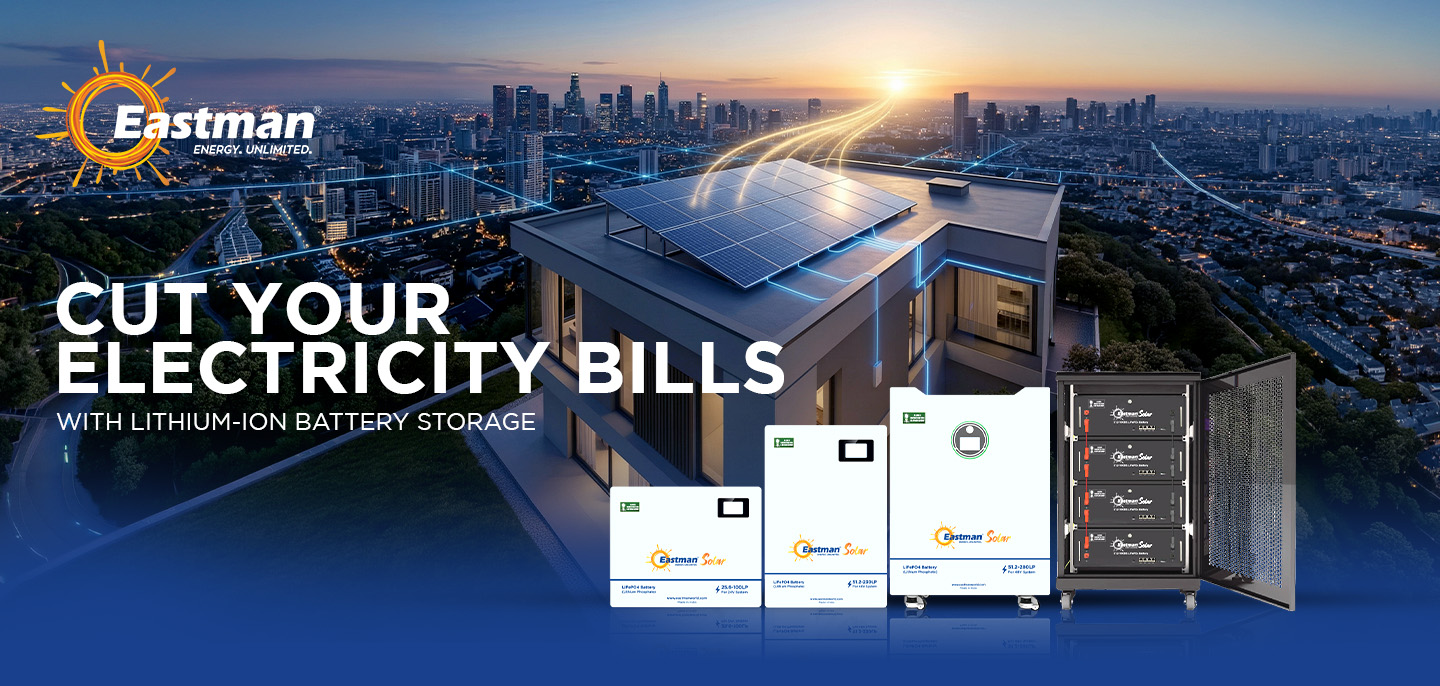
Cut Your Electricity Bills with Lithium-Ion Battery Storage
Rising electricity prices and frequent power cuts are pushing Indian homeowners to look for smarter energy solutions. A Lithium-Ion battery system is the answer—helping you save money, gain energy independence, and enjoy uninterrupted power.
Yes, Lithium-Ion Batteries Really Reduce Electricity Bills
A home solar battery stores excess energy produced by your rooftop solar panels and makes it available when you need it most—during evenings, peak tariff hours, or power outages. Instead of buying costly grid electricity, your home runs on clean, stored solar power.
How it Saves You Money
- Use Solar Energy Day & Night
Store unused solar power during the day and use it after sunset. - Avoid Peak Hour Tariffs
Power your home with stored energy when electricity rates are highest. - Maximize Self-Consumption
Reduce energy wastage and dependence on the grid. - Protection from Rising Tariffs
Lock in long-term savings as electricity costs continue to increase.
Reliable Power When You Need It Most
Power cuts are still common across many parts of India. With a solar battery backup, your essential appliances stay ON:
- Lights & fans
- Refrigerator
- Wi-Fi & communication devices
- Water pumps & electronics
Enjoy peace of mind with uninterrupted power—even when the grid fails.
Smart Energy, Smarter Living
A solar battery system gives you complete control over your home’s energy usage. High-quality lithium batteries offer:
- Fast charging & silent operation
- Long life & low maintenance
- Seamless compatibility with modern inverters
Whether you live in a city, town, or rural area, solar storage ensures reliable and efficient power every day.
Designed for Your Home, Built for Nation
Our solar battery solutions are custom-designed based on your home’s energy needs, roof size, and local electricity tariffs. Our experts ensure:
- Optimal battery capacity
- Maximum savings
- Reliable backup performance
No over-sizing. No energy wastage. Just smart savings.
Why Invest in a Lithium-Ion Battery Today?
- Lower monthly electricity bills
- Reduced dependence on the grid
- Protection against power cuts
- Clean, sustainable energy
- Long-term financial savings
Power Your Home. Protect Your Savings.
Upgrade your rooftop solar system with a Lithium-Ion battery and take control of your energy future.
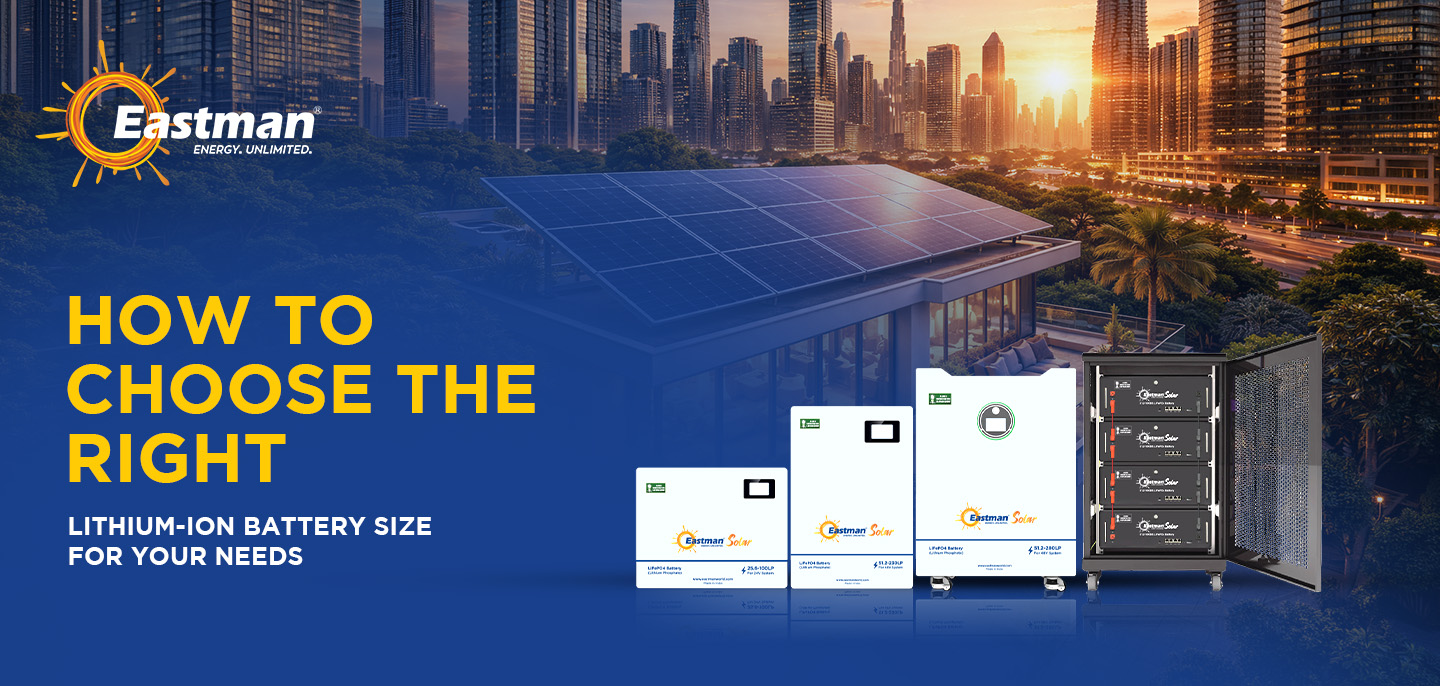
How to Choose the Right Lithium-Ion Battery Size for Your Needs
Choosing the right lithium-ion battery size is essential to ensure your solar power system delivers reliable backup, optimal efficiency, and long-term value. With rising electricity tariffs and frequent grid interruptions, Indian homes and businesses are increasingly adopting rooftop solar systems integrated with lithium-ion batteries to enhance energy independence.
Selecting the correct battery capacity involves balancing backup duration, load requirements, space availability, safety, lifecycle cost, and future scalability. This guide explains a step-by-step method to accurately size a lithium-ion battery for your application.
Step 1: Estimate Your Load Requirements
Start by calculating the total electrical load you want to power using the battery during outages.
- List all appliances (lights, fans, TV, laptop, router, etc.)
- Note their rated power (in watts)
- Estimate daily usage time (in hours)
Example:
A 60 W fan used for 6 hours:
60 × 6 = 360 Wh/day
Add all appliance energy values to determine your average daily energy consumption (Wh or kWh).
👉 Design Tip:
Size your system for 120–150% of current load to account for seasonal variation and future expansion.
Step 2: Decide Required Backup Duration
Battery size is directly linked to how long you want power during grid outages.
- Homes & small offices: 3–5 hours
- Shops, clinics, IT offices: 6–8 hours
- Off-grid systems, telecom, critical loads: 10–15+ hours
Identify critical loads only, not total connected load, to optimize battery cost.
Step 3: Calculate Total Battery Capacity (kWh)
Formula:
Battery Capacity (Wh) = Load (W) × Backup Time (hrs)
Example:
If you want to run a 1 kW load for 4 hours:
1,000 × 4 = 4,000 Wh = 4 kWh
Adjust for Usable Capacity
Lithium-ion batteries typically allow 80–90% usable Depth of Discharge (DoD).
So required battery size:
4 kWh ÷ 0.8 = 5 kWh (recommended)
Step 4: Select Battery Voltage
Battery voltage must match inverter and charge controller specifications.
| Application | Recommended Voltage |
|---|---|
| Small home systems | 24V |
| Residential / SME | 48V / 51.2V |
| Commercial / Industrial | 96V–384V |
👉 Why 48V is preferred:
- Higher efficiency
- Lower current & cable losses
- Better safety-to-performance balance
Step 5: Decide Number of Batteries (Corrected Example)
Lithium-ion batteries are commonly available as 48V modules with capacities like 50Ah, 100Ah, or 150Ah.
Example Calculation (Corrected):
- Required battery capacity: 5 kWh
- Selected battery: 48V, 100Ah
Battery energy:
48V × 100Ah = 4.8 kWh
Number of batteries required:
5 kWh ÷ 4.8 kWh ≈ 1.05 → 1 battery
👉 Recommendation:
Add 20–30% expansion margin, especially for homes planning future load additions.
Choosing the Right Lithium Battery by Application
Residential Homes
Key priorities: Safety, long life, compact size, low maintenance
- Choose LFP (Lithium Iron Phosphate) chemistry for superior thermal stability
- Integrated BMS for cell balancing & protection
- Hybrid inverter compatibility (grid + solar + battery)
- Warranty: Minimum 5–10 years or 6,000 cycles
Ideal for homes, apartments, and housing societies.
Commercial & Industrial Buildings
Key priorities: Reliability, scalability, uptime
- Modular rack or containerized battery systems
- High cycle life (6,000+ cycles)
- Fast charging capability
- Remote monitoring & service support
Used in offices, hospitals, malls, data centers, and factories.
Final Checklist Before Buying
- ✔ Daily energy consumption calculated
- ✔ Backup duration defined
- ✔ Battery usable capacity considered
- ✔ Voltage compatible with inverter
- ✔ Future expansion provisioned
- ✔ Certified BMS & safety standards
- ✔ After-sales service & warranty checked
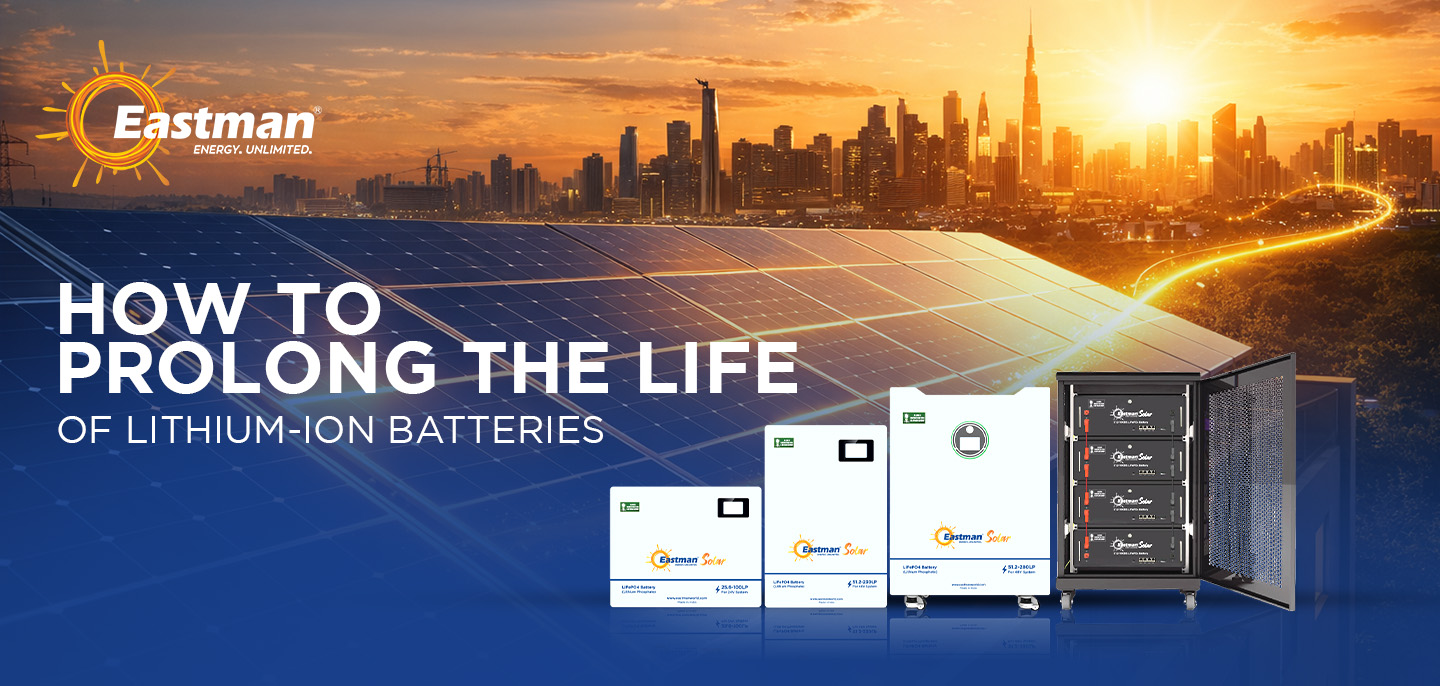
How to Prolong the Life of Lithium-Ion Batteries
Lithium-ion batteries power much of modern life—from smartphones and laptops to electric vehicles (EVs) and energy storage systems. Because these batteries represent a significant investment, extending their lifespan is important not only for cost savings but also for sustainability.
This guide outlines proven best practices to help maximize lithium-ion battery life and maintain reliable performance over time.
1. Avoid Deep Discharges
Frequently discharging lithium-ion batteries to 0% places unnecessary stress on internal cell chemistry and accelerates capacity degradation.
Best practice:
- Recharge devices when battery levels drop to 20–30%
- For EVs, maintain charge above 30–40% during daily use
Avoiding deep discharges significantly improves long-term battery health.
2. Store Batteries at an Optimal State of Charge
For long-term storage, lithium-ion batteries should never be kept fully charged or fully depleted.
Recommended storage level:
- 40–60% state of charge
This range minimizes chemical aging and capacity loss. For example, when storing an e-bike or backup battery for several months, partially charge it instead of leaving it full or empty.
3. Operate Within Safe Voltage and Charge Ranges
Operating batteries at extreme high or low states of charge increases wear on electrodes.
Ideal daily operating window:
- 10–90% state of charge
- Avoid frequent charging to 100% unless necessary
Staying within this range reduces long-term voltage stress and enhances cycle life.
4. Avoid Prolonged Charging at 100%
Keeping a battery at full charge for extended periods accelerates capacity fade.
Tips:
- Unplug devices once fully charged
- Enable charge-limit features (e.g., 80–90%) where available
- For EVs, reserve 100% charging for long trips only
Allowing batteries to rest below full charge significantly extends usable life.
5. Control Temperature Exposure
Heat is one of the biggest contributors to lithium-ion battery degradation.
Safe operating temperature range:
- Approximately 0°C to 45°C (32°F to 113°F)
Avoid:
- Leaving batteries inside hot vehicles
- Installing battery systems without proper ventilation or cooling
- Charging in high-temperature environments
Effective thermal management directly improves safety and longevity.
6. Use a Quality Battery Management System (BMS)
A robust Battery Management System is critical for protecting lithium-ion cells.
A good BMS:
- Prevents over-charging and deep discharging
- Balances cells for uniform performance
- Monitors temperature, voltage, and current
- Enhances safety and lifespan automatically
Always choose lithium battery systems with integrated, advanced BMS protection.
7. Monitor Capacity Degradation Over Time
All lithium-ion batteries gradually lose capacity after repeated charge cycles.
Signs of aging:
- Reduced runtime or driving range
- Faster voltage drops
- Unexpected shutdowns
When capacity falls by 20–30%, battery replacement should be planned to avoid reliability issues.
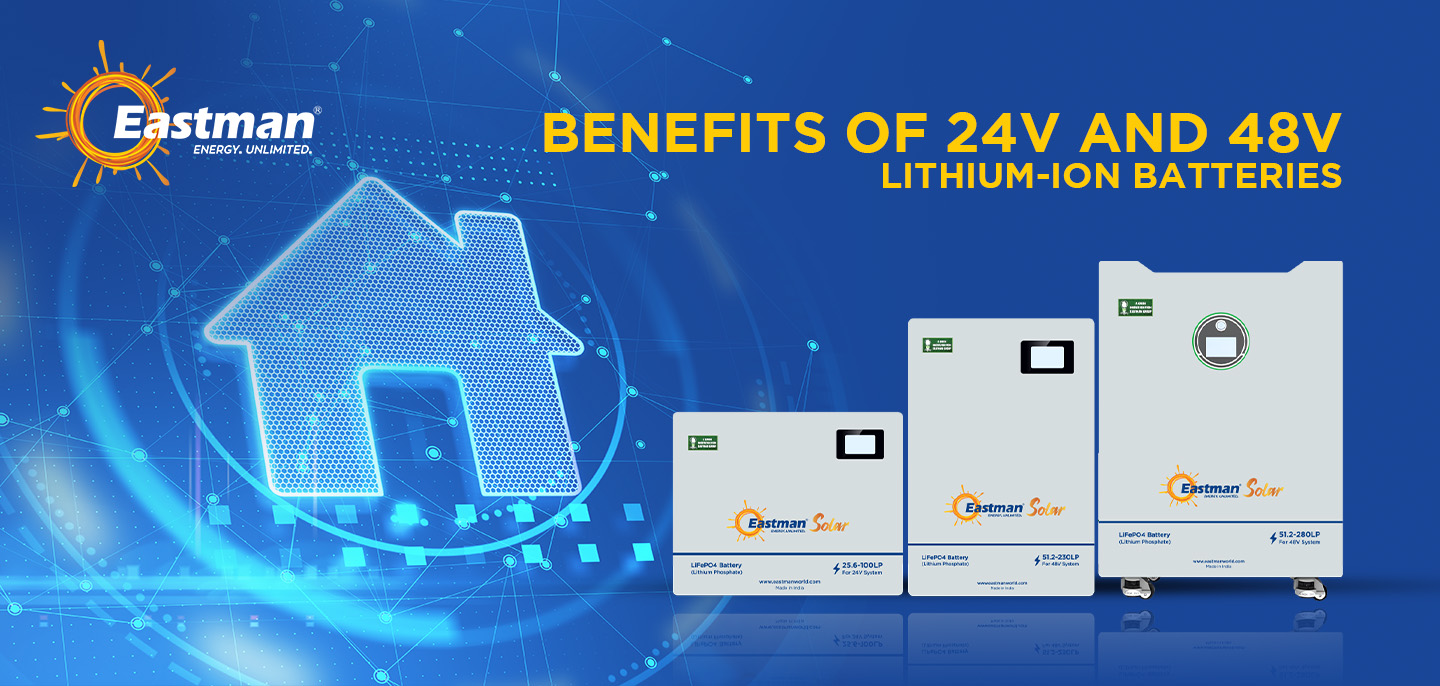
Benefits of 24V and 48V Lithium-Ion Batteries
Lithium-ion batteries have become the preferred choice for modern inverter backup and solar energy storage systems. Among the available voltage options, 24V and 48V lithium-ion batteries are the most commonly used in residential and small commercial applications. Each voltage level offers specific advantages depending on power requirements, system size, and future scalability.
Understanding their benefits helps homeowners and installers choose the right configuration.
Benefits of 24V Lithium-Ion Batteries
Ideal for Medium Power Applications
24V lithium-ion batteries are best suited for small to mid-size homes and moderate power requirements.
Key Advantages
- Higher Efficiency Than 12V Systems Compared to 12V batteries, 24V systems reduce current flow, resulting in:
- Lower energy losses
- Less heating in cables
- Improved overall efficiency
- Compact and Space-Saving 24V lithium batteries require fewer cells than multiple 12V systems, making them:
- More compact
- Easier to install indoors
- Supports Moderate Loads Suitable for running:
- Lights, fans, TV, refrigerator
- Washing machine
- One air conditioner (depending on capacity)
- Lower Cable Size & Cost Reduced current means thinner cables can be used, lowering wiring costs.
- Cost-Effective Entry Point 24V systems provide a good balance between performance and affordability for residential users upgrading from lead-acid batteries.
Best Use Cases
- 2–3 BHK homes
- Small solar inverter systems
- Residential inverter backup
Benefits of 48V Lithium-Ion Batteries
Designed for High Power & Long Backup
48V lithium-ion batteries are the preferred choice for high-load residential, solar, and commercial systems.
Key Advantages
- Higher Power Handling Capacity 48V systems can easily support:
- Multiple air conditioners
- Water pumps
- Microwave ovens
- Office and commercial equipment
- Much Lower Current, Higher Efficiency Higher voltage means:
- Very low current flow
- Minimal energy loss
- Better system stability under heavy loads
- Faster Charging 48V lithium batteries charge faster, especially when paired with:
- Rooftop solar systems
- High-capacity hybrid inverters
- Enhanced Safety & Stability Lower current reduces:
- Cable heating
- Connector stress
- Risk of electrical faults
- Future-Ready & Scalable Ideal for:
- Solar expansion
- EV charger integration
- Larger inverter upgrades
- Longer System Life Reduced electrical stress improves:
- Battery longevity
- Inverter reliability
Best Use Cases
- 3–5 BHK homes and villas
- Homes with rooftop solar (5 kW+)
- Small commercial spaces
- High-capacity inverter systems (5 kVA and above)
24V vs 48V Lithium-Ion Battery: Quick Comparison
| Feature | 24V Lithium Battery | 48V Lithium Battery |
|---|---|---|
| Power Handling | Medium | High |
| Efficiency | High | Very High |
| Cable Size | Medium | Smaller |
| Charging Speed | Fast | Very Fast |
| Load Capacity | Moderate | Heavy |
| Scalability | Limited | Excellent |
| Ideal Inverter Size | Up to 3–5 kVA | 5 kVA and above |
Final Thoughts
Both 24V and 48V lithium-ion batteries offer clear advantages over traditional lead-acid systems.
- Choose 24V if your power needs are moderate and space and budget are considerations.
- Choose 48V if you need higher power, faster charging, better efficiency, and future expansion.
Selecting the right voltage ensures better performance, higher safety, and longer system life.
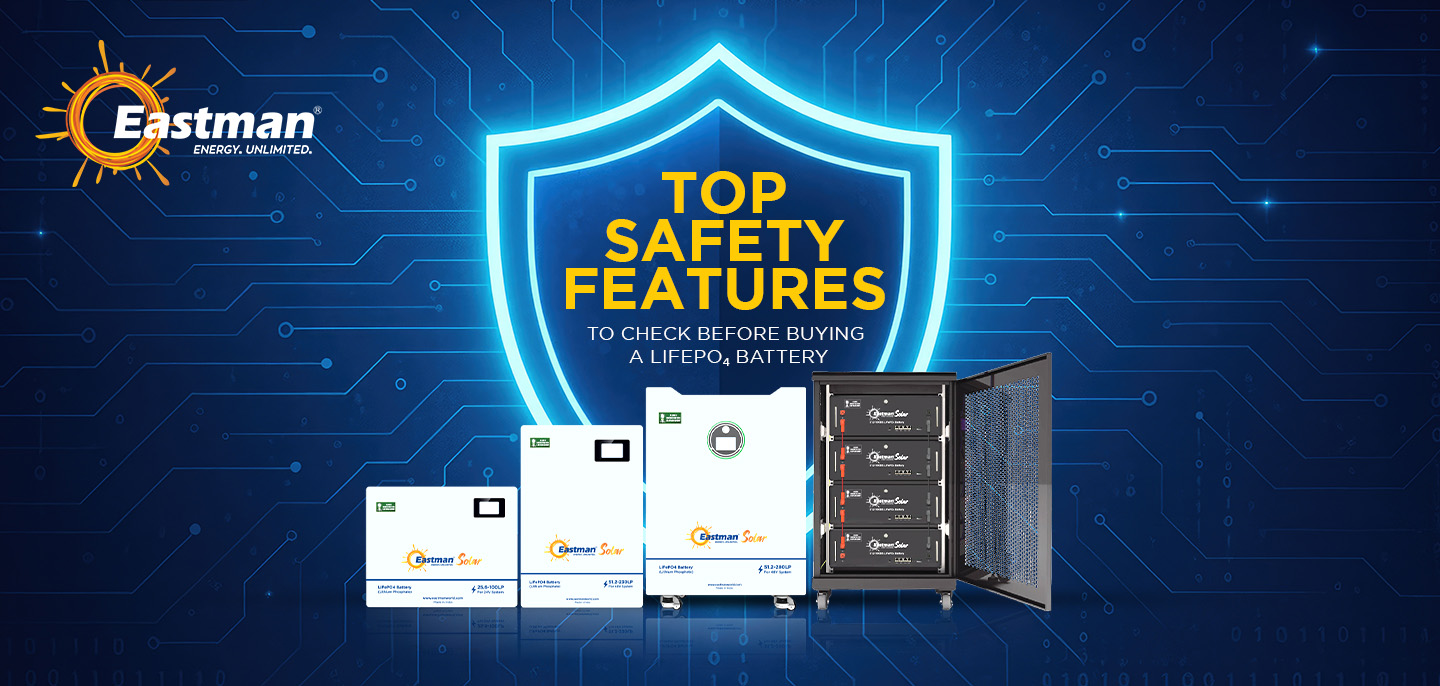
Top Safety Features to Check Before Buying a LiFePO₄ Battery
Introduction: Why LiFePO₄ Battery Safety Matters
LiFePO₄ (Lithium Iron Phosphate) batteries are widely regarded as the safest, most reliable, and durable lithium battery technology available today. They are commonly used in electric vehicles, solar energy systems, and home power backup applications.
Whether you are a solar enthusiast powering a homestead, a business owner investing in equipment or farm operations, or an environmentally conscious commuter using an electric scooter or bike, understanding LiFePO₄ battery safety features is essential.
While LiFePO₄ battery fires and failures are rare, not all battery packs are manufactured to the same safety standards. Many newer or low-cost brands compromise on critical safety components, testing procedures, or certifications. This often leads buyers to question, “Are Lithium Iron Phosphate batteries safe?”
The answer is yes—LiFePO₄ batteries are extremely safe when they include essential safety features and certified protection systems. This guide outlines the most important safety features to look for before purchasing a LiFePO₄ battery, helping you protect both your investment and the environment.
1. Battery Management System (BMS) Protection
A Battery Management System (BMS) is the most critical safety component of any LiFePO₄ battery. It continuously monitors and manages individual battery cells, ensuring safe operation under all conditions.
Key Safety Functions of a Reliable BMS:
- Overcharge Protection: Prevents excessive charging that could lead to overheating, fire, or cell damage.
- Overdischarge Protection: Stops the battery from discharging beyond safe limits, protecting cells from permanent damage and capacity loss.
- Short-Circuit Protection: Instantly disconnects the battery during a short circuit, minimizing the risk of fire or system failure.
- Cell Balancing: Ensures all cells charge and discharge evenly, preventing uneven wear and extending battery lifespan.
Why it matters: Inadequate or poorly designed BMS units are a leading cause of lithium battery failures. In recent years, several electric bike fire incidents in India were linked to battery packs lacking proper BMS protection.
2. Thermal Management and Overheating Protection
Overheating protection is a vital safety feature in LiFePO₄ battery systems. Batteries can overheat due to rapid charging, excessive discharge rates, internal faults, or short circuits. Unchecked heat buildup may result in fire or catastrophic failure.
High-quality LiFePO₄ batteries monitor internal temperature using thermal sensors, thermocouples, or thermal fuses. If temperatures exceed safe operating limits, the system automatically shuts down to prevent damage.
Best practice: Always choose batteries with built-in temperature sensors and automatic thermal cutoff mechanisms.
3. Overcharge and Overdischarge Protection
Overcharging and overdischarging are among the most common causes of lithium battery degradation and safety issues. A safe LiFePO₄ battery must include both protections.
This is typically managed by the BMS, which disconnects the battery once voltage thresholds are exceeded—either too high during charging or too low during discharging. This protects the battery cells, inverter, and connected equipment.
Tip: Ask the supplier for technical datasheets that clearly mention cutoff voltages and protection thresholds.
4. Short-Circuit and Overcurrent Protection
A short circuit occurs when unintended electrical connections cause a sudden surge of current. Without proper protection, this can lead to extreme heat, fire, or even explosion.
LiFePO₄ batteries should include:
- Short-circuit protection using fuses or electronic disconnects
- Overcurrent protection via current sensors that cut off power when current exceeds safe limits
Pro Tip: Confirm with your supplier how quickly the protection activates—milliseconds matter when preventing thermal events.
5. Quality Certifications and Compliance Standards
Certifications provide assurance that a LiFePO₄ battery has undergone rigorous testing and meets global safety and performance standards.
Essential Certifications to Look For:
- UL 1973 / UL 2580: Safety standards for stationary and lithium batteries and EV applications
- IEC 62133: International standard for rechargeable lithium battery safety
- BIS (Bureau of Indian Standards): Mandatory certification for lithium batteries sold in India
- ISO 9001:2015: Certification for the manufacturer’s quality management system
Batteries without recognized certifications may pose higher safety and reliability risks.
Final Thoughts
LiFePO₄ batteries are among the safest energy storage technologies available today—but only when designed with robust safety systems and certified components. By carefully evaluating the Battery Management System, thermal protection, electrical safeguards, and certifications, you can confidently select a LiFePO₄ battery that delivers long-term performance, safety, and peace of mind.
A well-built LiFePO₄ battery not only protects your equipment and property but also supports sustainable energy use and environmental responsibility—making it a smart choice for the future.
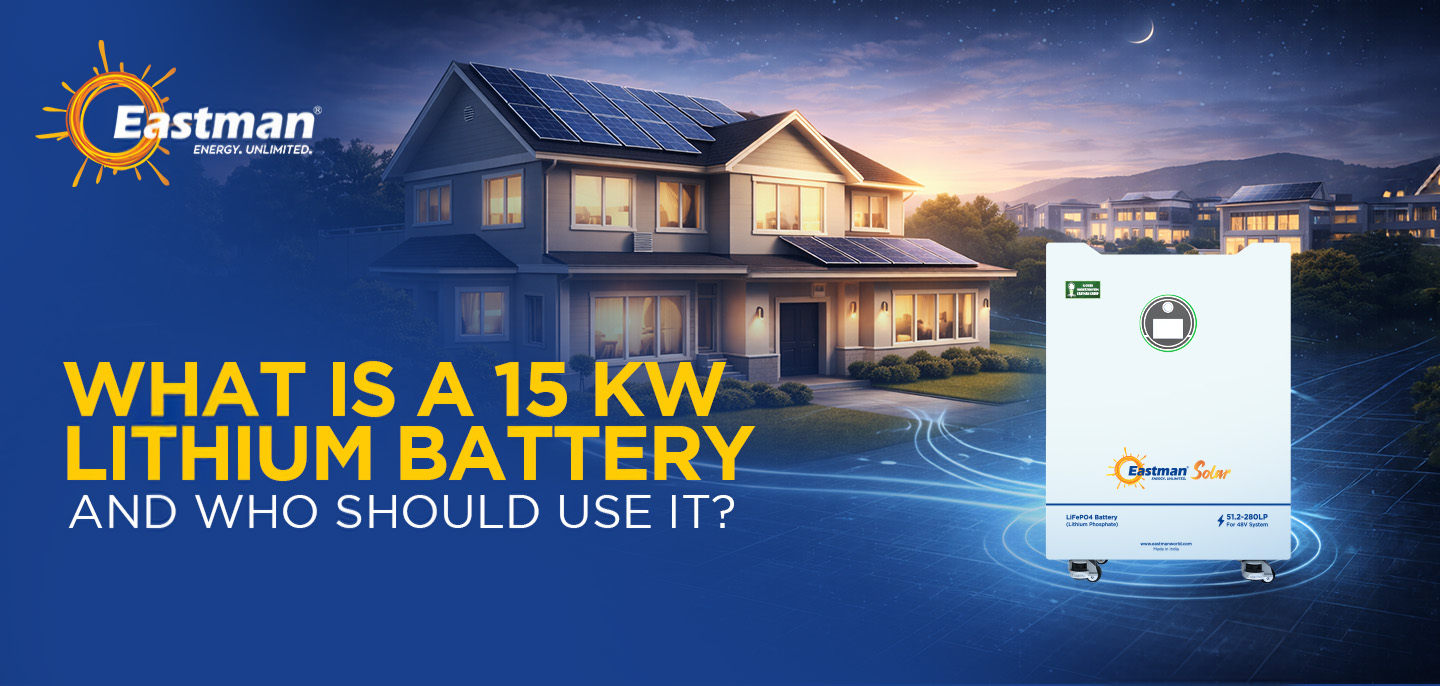
What Is a 15 KW Lithium Battery and Who Should Use It?
1. Large Homes, Villas & Premium Apartments
A 15 kW lithium battery is ideal for:
- 3–5 BHK homes
- Villas and bungalows
- Homes running multiple ACs, pumps, and kitchen appliances
It allows homeowners to run both essential and heavy loads simultaneously during power cuts without performance drops.
2. Solar-Powered Homes
Homes with rooftop solar systems (5–10 kW or higher) benefit significantly from a 15 kW lithium battery:
- Stores excess solar power during the day
- Provides night-time and outage backup
- Enables higher self-consumption
- Reduces grid dependency and electricity bills
3. Small Commercial Spaces
A 15 kW lithium battery is also suitable for:
- Clinics and diagnostic centres
- Retail stores and showrooms
- Small offices and IT setups
- Cafés, restaurants, and salons
These environments require stable, uninterrupted power to protect equipment and maintain business continuity.
4. Areas with Frequent Power Cuts or Voltage Fluctuations
In regions with:
- Multiple daily outages
- Poor grid stability
- Low or high voltage issues
A 15 kW lithium battery provides consistent output and protects sensitive electronics better than traditional inverter systems.
5. Diesel Generator Replacement or Reduction
For users looking to:
- Reduce diesel consumption
- Cut noise and emissions
- Lower operational costs
A 15 kW lithium battery can replace or significantly reduce reliance on DG sets, especially when combined with solar.
Key Benefits of a 15 kW Lithium Battery System
- Runs high-power appliances smoothly
- Faster charging compared to lead-acid systems
- Compact footprint despite high capacity
- Safe for indoor residential installation
Final Thoughts
A 15 kW lithium battery system is not just a backup—it’s a long-term energy solution for homes and businesses with higher power demands.
It offers the perfect balance of performance, safety, and future readiness. If your requirement includes running heavy appliances, integrating solar, or ensuring uninterrupted power during frequent outages, a 15 kW lithium battery is a smart and future-proof choice.
