
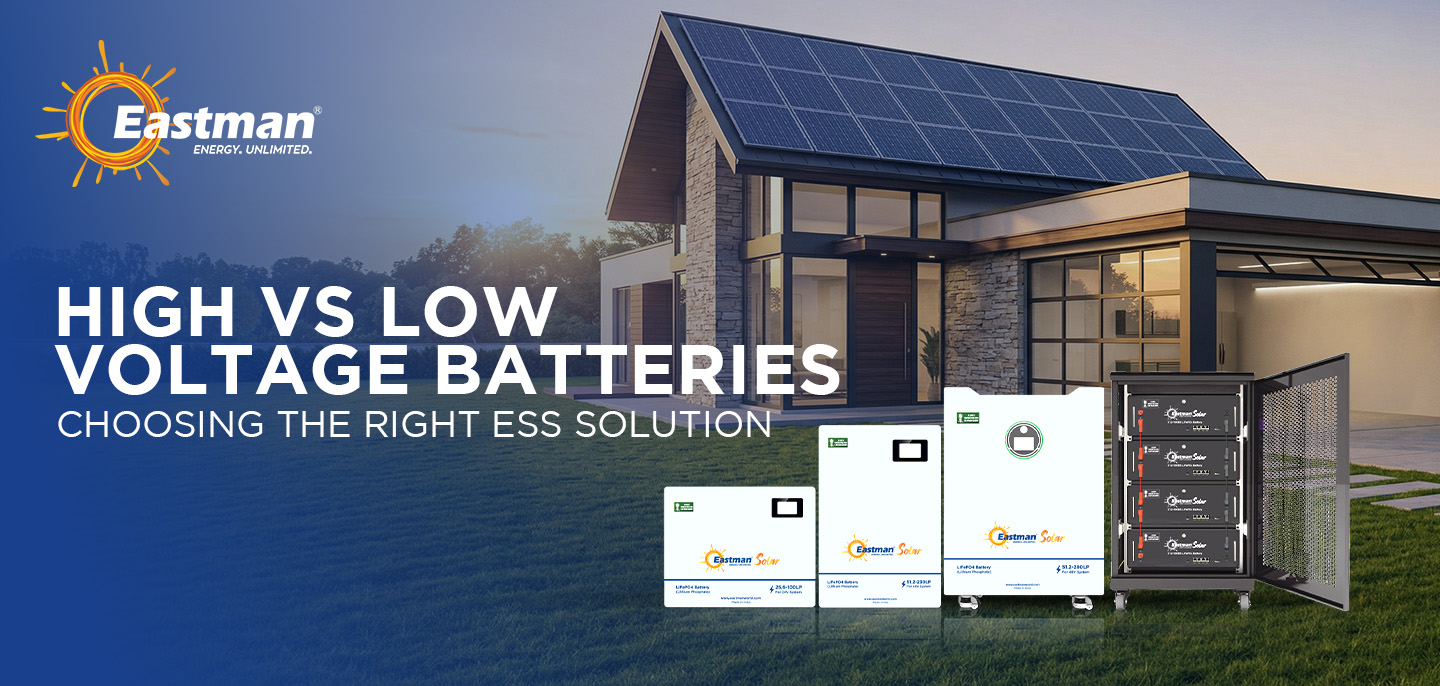
High vs Low Voltage Batteries: Choosing the Right ESS Solution
Energy Storage Systems (ESS) are becoming an essential part of modern energy infrastructure. Whether it’s a home with rooftop solar, a commercial building, or an industrial facility, energy storage helps ensure reliable power, better energy management, and improved efficiency.
When selecting an ESS battery, one of the most common questions people ask is:
Should I choose a High Voltage battery or a Low Voltage battery?
The answer isn’t always straightforward. The right choice depends on factors such as energy consumption, system size, budget, and future expansion plans rather than a one-size-fits-all solution.
What is a Low Voltage ESS Battery?
Low voltage ESS batteries typically operate within a range of 48V to 100V. These systems are commonly used in residential solar installations and small backup power setups.
Because of their simpler design and easier installation, low voltage batteries are a popular choice for homeowners.
Key Advantages
- Safer and easier to install and maintain
- More affordable for smaller systems
- Flexible installation options
- Easy to expand by adding additional battery modules
Ideal Applications
Low voltage ESS batteries work best in situations such as:
- Homes with rooftop solar systems
- Small offices or shops
- Backup power for essential household appliances
- Users with moderate daily energy consumption
For homeowners looking for a simple, reliable, and cost-effective energy backup solution, low voltage systems are often the ideal starting point.
What is a High Voltage ESS Battery?
High voltage ESS batteries generally operate between 100V and 1000V. These systems are designed to handle larger energy loads and deliver higher power output. They are typically used in large residential setups, commercial buildings, and industrial energy storage systems where higher efficiency and performance are required.
Key Advantages
- Higher overall system efficiency
- Lower energy losses during operation
- Better compatibility with large solar installations
- Works well with advanced energy management systems
Ideal Applications
High voltage systems are commonly used in:
- Large homes or residential complexes
- Commercial buildings and factories
- Electric Vehicle (EV) charging infrastructure
- Projects that require continuous high-power output
As energy demand increases, high voltage systems become increasingly valuable due to their performance and efficiency advantages.
Which ESS Battery Should You Choose?
Before selecting an energy storage system, it’s important to consider a few practical questions:
- How much electricity do you use daily?
- Are you planning to expand your solar system in the future?
- Is your priority lower upfront cost or maximum performance?
- Do you need support for high-power equipment or EV charging?
If your goal is reliable home backup with a budget-friendly solution, a low voltage ESS battery is usually the best choice. However, if your project requires higher performance, larger capacity, and advanced energy management, a high voltage ESS battery can be a better long-term investment.
