
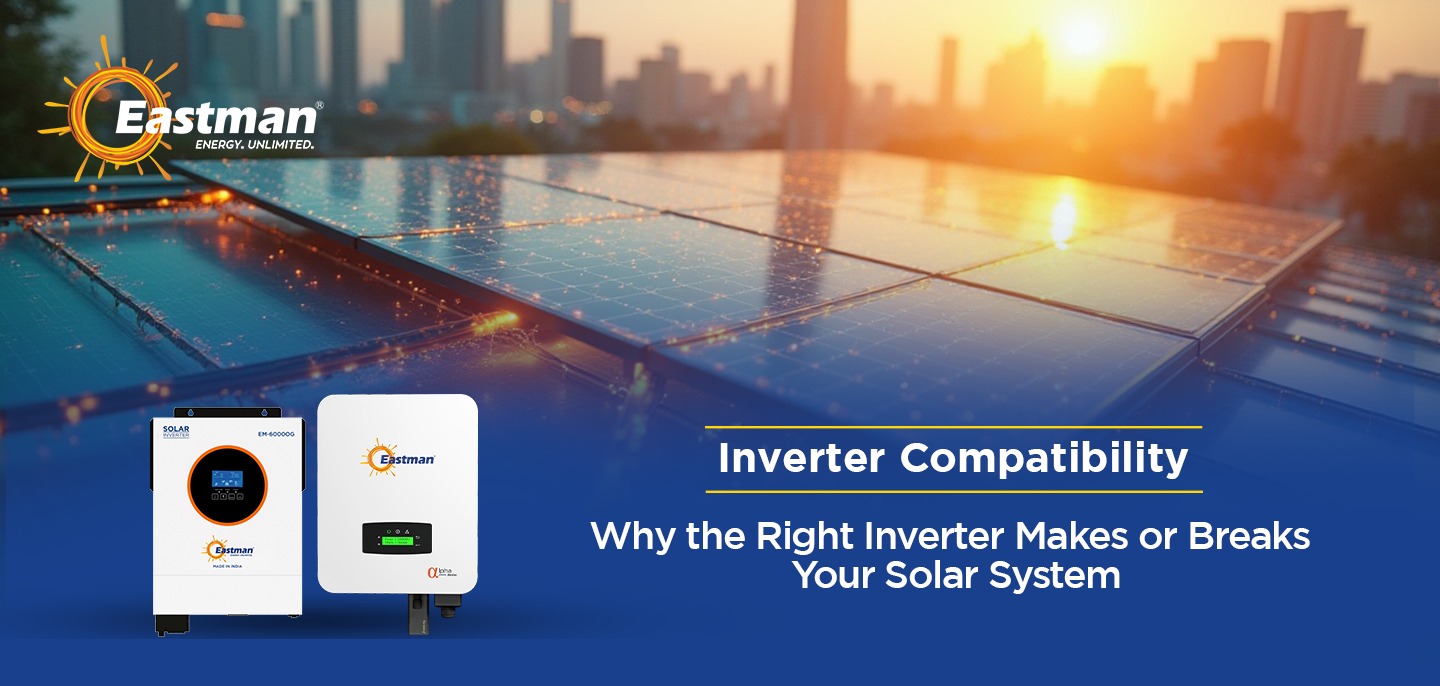
Why Inverter Compatibility Is Critical to Solar System Performance
Why Inverter Compatibility Is Critical to Solar System Performance
Importance of Inverter Compatibility with Inverter
In any solar system, the inverter is more than just a device, it's the brain that powers your home. It converts sunlight into usable energy and keeps everything running smoothly behind the scenes. But just like any brain, it needs the right body to work with. That’s where inverter compatibility becomes critical and often overlooked.
Why Inverter Compatibility Really Matters
Imagine trying to fit a square peg in a round hole, that’s what happens when your inverter doesn’t match your solar setup. Compatibility ensures:
- Peak Performance – A compatible inverter pulls the most power from your solar panels.
- System Safety – Prevents short circuits, overloads, and damage to batteries or appliances.
- Longer Lifespan – Reduces strain on components, so everything lasts longer.
- Hassle-Free Monitoring – Easily track and manage your power system through connected apps.
- Eastman Inverters: Engineered for Compatibility, Performance, and Peace of Mind
Eastman offers a powerful and flexible range of solar inverters designed with a deep understanding of battery behaviour, energy needs, and Indian power conditions. Whether you're using PWM or MPPT-based models, or advanced hybrid and off-grid inverters, Eastman ensures intelligent communication with your system for faster charging, safer operation, and smarter energy management.
What truly sets Eastman apart is how seamlessly their inverters pair with Eastman lithium and tubular solar batteries. This ensures total battery compatibility, longer battery life, and reliable system performance without the risk of mismatch or inefficiency.
Need to connect to the grid? Eastman’s Grid Tie Inverters are built for just that. Perfect for homes, businesses, and solar plants that are connected to the utility grid, these inverters:
- Deliver high-efficiency power conversion
- Feature advanced MPPT technology to extract maximum solar energy
- Support net metering, helping you save more by sending excess power back to the grid
- Offer anti-islanding protection, automatically shutting off during outages for safety
- Operate reliably across wide voltage ranges, ideal for India's unpredictable grid
Whether you are powering a city home, a retail store, or a remote rural setup, Eastman inverters are engineered to adapt. With rugged design, robust protection features, and seamless integration with the Eastman One App for remote monitoring, Eastman ensures your solar system runs efficiently, safely, and smartly every single day.
Stay in Control with the Eastman One App
Inverter compatibility isn’t just about wires it’s also about connectivity. With the Eastman One App, you get complete control and visibility over your inverter right from your phone.
What can you do with the Eastman One App?
- Live Monitoring: Check real-time performance, battery levels, and solar output.
- Instant Alerts: Be the first to know about any faults or maintenance needs.
- Remote Access: Monitor your system remotely whether you're at home or halfway across the world.
- Plug & Play Integration: The app connects seamlessly with Eastman Inverters. No messy setups. No compatibility issues. Just power, connected.
With the Eastman One App, you are always in control whether you are managing a rooftop in Lagos or a remote site in Lebanon.
Your solar system is an investment in your future. Don’t let that investment be compromised by incompatible components. With Eastman’s inverter range and the Eastman One App, you get more than just power you get performance, protection, and peace of mind.
Engineered for Compatibility and Performance
Eastman offers a versatile range of solar inverters designed with a deep understanding of battery dynamics and system integration. From PWM and MPPT-based inverters to advanced hybrid and off-grid models, our inverters ensure smart communication, fast charging, and optimal energy management, specially calibrated to work seamlessly with Eastman's lithium and tubular solar batteries, ensuring safe operation, extended battery life, and peak system performance.
With high efficiency, wide input voltage ranges, and robust protections, these inverters are built to handle the challenges of diverse Indian grid conditions and off-grid applications alike. Whether you are powering a home, shop, or rural setup, Eastman’s inverter range guarantees reliable energy delivery with total battery compatibility.
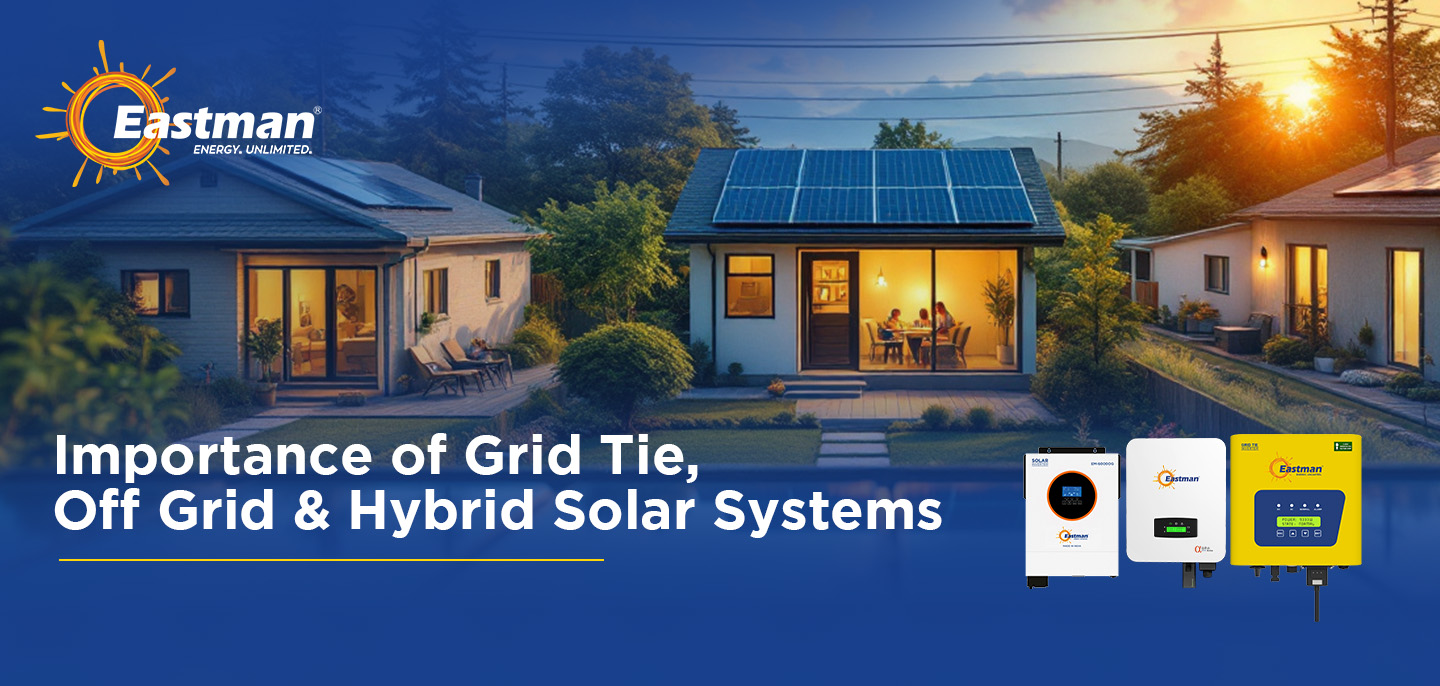
Importance of Grid Tie, Off Grid and Hybrid Solar Systems
With the rising demand for sustainable energy and the increasing challenges of power reliability, solar energy has emerged as a powerful and viable alternative. Among solar solutions, on-grid, off-grid, and hybrid solar systems each serve specific needs and play a critical role in modern energy management. Understanding their importance helps homeowners, businesses, and governments choose the most efficient energy solution tailored to their specific power conditions and goals.
1. Importance of On-Grid Solar Systems
On-grid solar systems, also known as grid-tied systems, are connected directly to the utility power grid. These systems generate electricity during the day and feed excess power back to the grid, earning users’ credits through net metering.
Key Benefits:
- Cost Savings: Reduces electricity bills significantly through net metering.
- No Battery Requirement: Less maintenance and upfront cost as batteries are not needed.
- Efficient Use of Power: Ensures continuous power availability as the grid serves as backup.
- Eco-Friendly: Encourages green energy usage and reduces carbon footprint.
2. Importance of Off-Grid Solar Systems
Off-grid systems operate independently of the utility grid and are ideal for remote locations where grid access is limited or non-existent. These systems rely on batteries to store solar power for use during night time or cloudy days.
Key Benefits:
- Complete Energy Independence: Perfect for rural or isolated areas.
- Reliable Backup: Ensures uninterrupted power supply, especially during grid failures.
- Customizable Solutions: Tailored to meet specific load and storage requirements.
- Encourages Self-Reliance: Reduces dependence on traditional energy sources.
3. Importance of Hybrid Solar Systems
Hybrid systems combine the benefits of both on-grid and off-grid setups. They are connected to the grid but also include a battery backup to store excess energy.
Key Benefits:
- Power Security: Provides backup during outages and ensures continuous power.
- Optimized Energy Use: Stores extra solar energy for night-time use or peak demand.
- Net Metering Advantage: Enables energy export and import from the grid.
- Flexibility: Ideal for areas with unreliable grid supply or fluctuating energy demands.
How Eastman is Catering to All Three Segments
Eastman offers a complete range of solar solutions designed to serve the diverse energy needs across on-grid, off-grid, and hybrid systems. With robust solar panels, high-efficiency inverters, and advanced battery technologies, Eastman empowers users to transition toward cleaner energy—whether they are connected to the grid, located in remote regions, or seeking the flexibility of hybrid power. Eastman's wide portfolio of products, backed by reliable service and support, ensures customers always get the right solution tailored to their unique power requirements and budget.
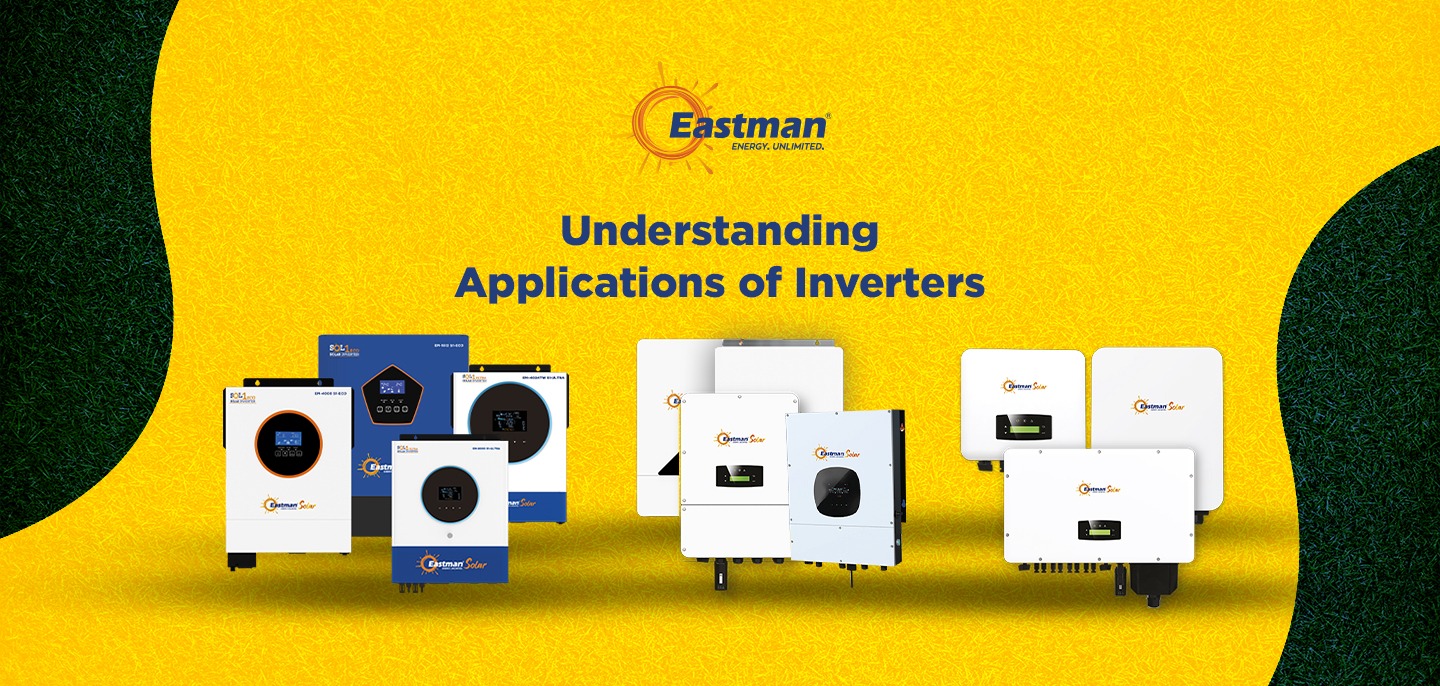
Understanding Applications of Inverters
Inverters play a pivotal role in modern energy systems, converting direct current (DC) power generated by renewable sources like solar panels into alternating current (AC) power that can be used in homes and businesses. The rise of renewable energy technologies has led to the development of various types of inverters, each designed for specific applications. In this blog, we will explore the three main types of inverters: Off-Grid Inverters, Grid-Tie Inverters, and Hybrid Inverters, and discuss why Eastman Inverters are a top choice for energy solutions.
1. Off-Grid Inverters: Empowering Remote Areas
What are Off-Grid Inverters?
Off-grid inverters are designed for use in systems that are not connected to the utility grid. These systems are most commonly used in remote areas where access to the grid is unavailable or unreliable. An off-grid inverter helps convert DC power from solar panels or other renewable sources into usable AC power to supply appliances and other electrical devices in homes or businesses.
Applications of Off-Grid Inverters
Remote and Rural Areas: Off-grid inverters are ideal for homes or businesses in areas far from utility infrastructure, such as rural villages, remote cottages, and agricultural installations. These locations benefit from clean, renewable energy without needing to connect to the electricity grid.
Emergency Power Backup: In case of grid failures or natural disasters, off-grid inverters provide a reliable backup power solution, ensuring that critical systems such as refrigeration, lighting, and medical equipment remain operational.
Sustainable Living: Off-grid inverters are commonly used in sustainable living initiatives. Individuals and families seeking to reduce their carbon footprint often opt for solar-powered off-grid systems, which can be paired with storage batteries to maximize energy independence.
2. Grid-Tie Inverters: Integrating Solar Power with the Grid
What are Grid-Tie Inverters?
Grid-tie inverters, also known as grid-connected inverters, are used in systems that are connected to the public utility grid. These inverters allow homeowners or businesses to feed excess solar or renewable energy back into the grid, reducing electricity bills or earning credits in the form of net metering. Essentially, they convert the DC power generated by solar panels into AC power that is synchronized with the electrical grid.
Applications of Grid-Tie Inverters
Residential Solar Systems: One of the most common applications for grid-tie inverters is in residential solar energy systems. These systems allow homeowners to reduce their dependence on the grid and take advantage of solar energy, reducing utility costs and promoting environmental sustainability.
Commercial Solar Systems: Businesses can also benefit from grid-tie inverters by installing large-scale solar energy systems. These systems can help lower operating costs and reduce their carbon footprint while allowing the company to contribute to the grid.
Utility-Scale Solar Projects: Large solar farms and renewable energy plants often use grid-tie inverters to feed solar power directly into the grid, which can supply clean energy to thousands of homes and businesses.
3. Hybrid Inverters: The Best of Both Worlds
What are Hybrid Inverters?
Hybrid inverters combine the functions of both off-grid and grid-tie inverters, allowing systems to be connected to the utility grid while also providing the ability to store excess energy in batteries. This feature is especially beneficial for consumers who want the flexibility of drawing power from either the grid or their own solar storage, depending on availability.
Applications of Hybrid Inverters
Energy Independence: Hybrid inverters are ideal for homeowners or businesses that want to reduce reliance on the grid and rely more on their own renewable energy systems. By storing excess energy in batteries during peak sunlight hours, users can consume it during the night or during power outages.
Battery Storage Systems: Hybrid inverters are commonly used in conjunction with energy storage systems like lithium-ion batteries. This combination allows consumers to optimize the use of solar energy, store excess power, and use it during times when solar energy production is low.
Load Shifting and Peak Shaving: Hybrid systems enable users to "shift" their electricity use to off-peak hours, thus saving on energy costs. They can also "shave" demand during peak periods, which helps to manage energy use and reduce the cost of electricity consumption.
Why Eastman Inverters Are the Best Choice for Your Energy Needs
Eastman Inverters have established themselves as leaders in the renewable energy space for several key reasons:
High Efficiency: Eastman inverters are engineered to maximize energy conversion efficiency, which translates to better performance and lower energy costs for users.
Reliability: Built with rugged, durable materials, Eastman inverters are designed to withstand extreme weather conditions and operate seamlessly in both harsh environments and stable climates.
Advanced Technology: Eastman integrates cutting-edge technologies such as MPPT (Maximum Power Point Tracking), smart grid compatibility, and real-time monitoring for optimized performance and ease of use.
Customer Support: Eastman provides excellent customer service, including warranty support, installation assistance, and troubleshooting, ensuring peace of mind for users.
Cost-Effectiveness: Offering high-end features at competitive prices, Eastman inverters deliver outstanding value without compromising on quality or performance.
Eco-Friendly Solutions: As part of Eastman's commitment to sustainability, their inverters are designed to help customers reduce their carbon footprint while contributing to the transition to renewable energy sources.
