
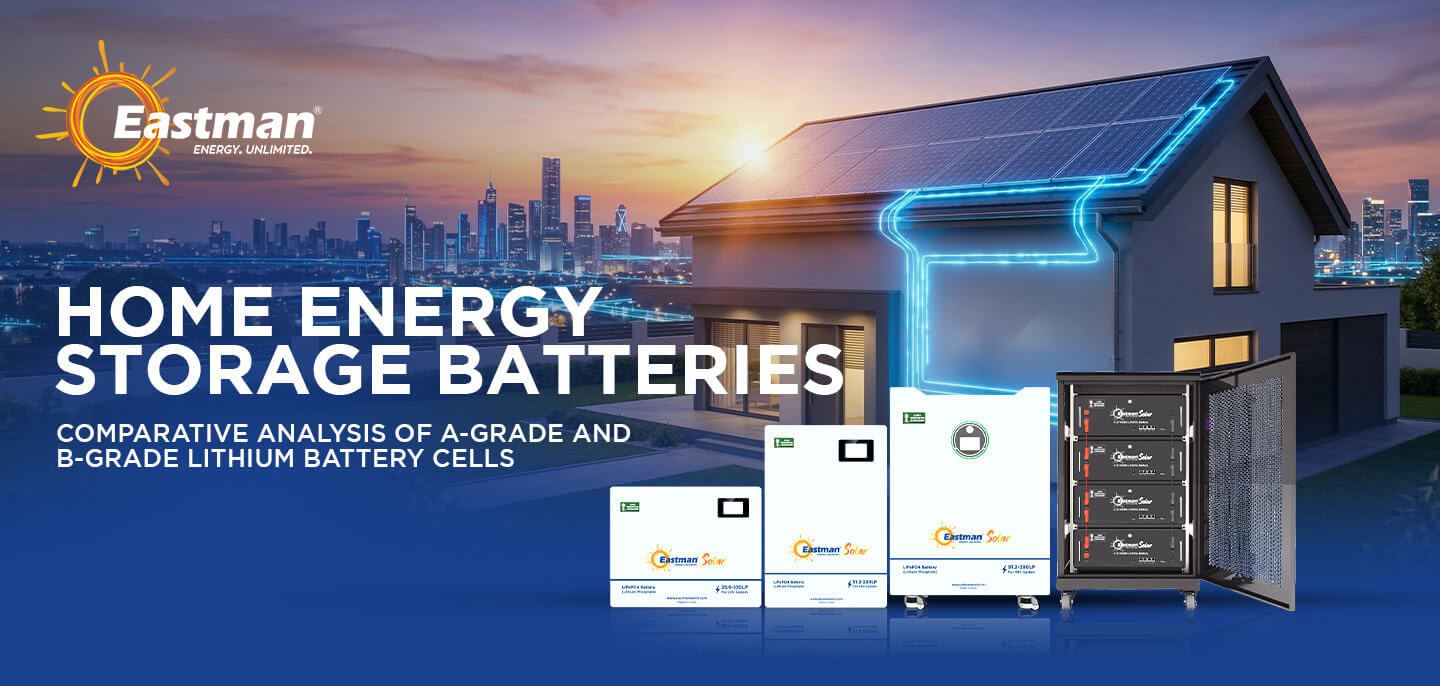
Home Energy Storage Batteries: Comparative Analysis of A-Grade and B-Grade Lithium Battery Cells
Home energy storage systems are becoming an essential part of modern households. They help balance power demand, provide reliable backup during outages, and maximize the use of renewable energy sources such as solar and wind.
By storing excess energy and using it when required, homeowners can reduce dependence on the grid, optimize energy consumption, and significantly lower electricity bills.
At the core of every home energy storage system lies the lithium battery. The quality of the lithium battery cells used directly impacts system efficiency, safety, lifespan, and overall reliability.
Among these cells, A-grade and B-grade lithium battery cells are commonly discussed. Understanding the difference between them is crucial when choosing the right battery for your home energy storage needs.
Understanding A-Grade and B-Grade Lithium Battery Cells
Lithium battery cells are classified into grades based on their performance, consistency, and manufacturing quality. Although grading standards may vary slightly by manufacturer, the fundamental differences between A-grade and B-grade cells are well recognized across the energy storage industry.
Key Differences Between A-Grade and B-Grade Battery Cells
1. Capacity and Energy Density
A-Grade Lithium Battery Cells: Offer high capacity and superior energy density with consistent output.
B-Grade Lithium Battery Cells: Have reduced capacity and may not deliver full rated performance consistently.
2. Cycle Life
A-Grade Cells: Long cycle life with thousands of charge/discharge cycles.
B-Grade Cells: Shorter lifespan and faster degradation.
3. Self-Discharge Rate
A-Grade Cells: Low self-discharge rate, retain energy longer.
B-Grade Cells: Higher self-discharge, lose energy faster.
4. Safety Performance
A-Grade Battery Cells: Better thermal stability and safety features with advanced BMS integration.
B-Grade Battery Cells: Lower safety margins, higher risk under extreme conditions.
5. Manufacturing Quality and Consistency
A-Grade Cells: Strict quality control, uniform performance.
B-Grade Cells: Performance variation due to less strict quality checks.
6. Certifications and Standards
A-Grade Lithium Battery Cells: Comply with UL, CE, IEC, BIS standards.
B-Grade Lithium Battery Cells: May lack full certification compliance.
7. Cost and Market Application
A-Grade Cells: Higher upfront cost but better long-term value.
B-Grade Cells: Lower initial cost but higher maintenance and replacement costs.
A-Grade vs B-Grade Battery Cells: Quick Comparison
| Feature | A-Grade Cells | B-Grade Cells |
|---|---|---|
| Capacity Consistency | High | Moderate |
| Cycle Life | Long | Shorter |
| Safety | High | Moderate |
| Self-Discharge | Low | Higher |
| Reliability | Excellent | Variable |
| Ideal Use | Home & Solar ESS | Low-demand Applications |
Which Battery Grade Is Best for Home Energy Storage?
For residential energy storage systems—especially solar-based solutions—A-grade lithium battery cells are the preferred choice. They offer reliable performance, enhanced safety, longer service life, and better return on investment.
Although B-grade cells may appear economical initially, their shorter lifespan and lower reliability often make them unsuitable for long-term home energy storage applications.
