
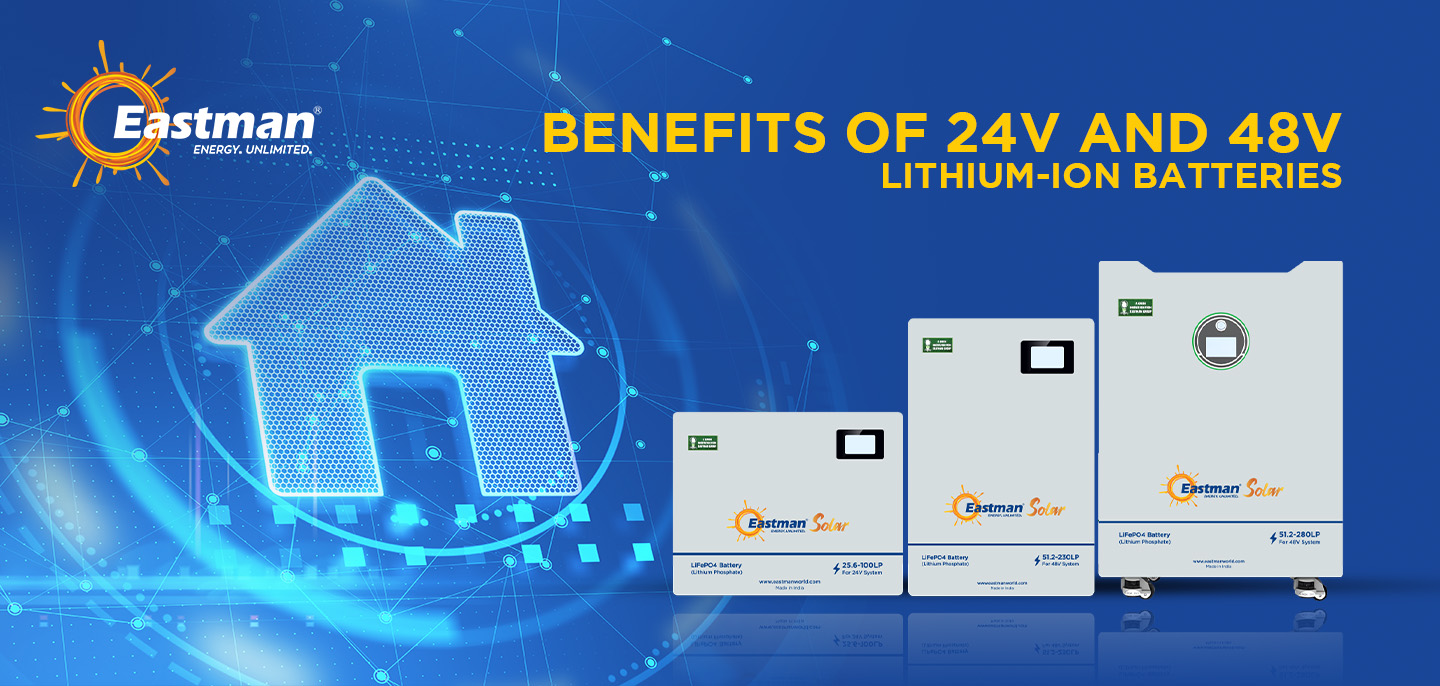
Benefits of 24V and 48V Lithium-Ion Batteries
Lithium-ion batteries have become the preferred choice for modern inverter backup and solar energy storage systems. Among the available voltage options, 24V and 48V lithium-ion batteries are the most commonly used in residential and small commercial applications. Each voltage level offers specific advantages depending on power requirements, system size, and future scalability.
Understanding their benefits helps homeowners and installers choose the right configuration.
Benefits of 24V Lithium-Ion Batteries
Ideal for Medium Power Applications
24V lithium-ion batteries are best suited for small to mid-size homes and moderate power requirements.
Key Advantages
- Higher Efficiency Than 12V Systems Compared to 12V batteries, 24V systems reduce current flow, resulting in:
- Lower energy losses
- Less heating in cables
- Improved overall efficiency
- Compact and Space-Saving 24V lithium batteries require fewer cells than multiple 12V systems, making them:
- More compact
- Easier to install indoors
- Supports Moderate Loads Suitable for running:
- Lights, fans, TV, refrigerator
- Washing machine
- One air conditioner (depending on capacity)
- Lower Cable Size & Cost Reduced current means thinner cables can be used, lowering wiring costs.
- Cost-Effective Entry Point 24V systems provide a good balance between performance and affordability for residential users upgrading from lead-acid batteries.
Best Use Cases
- 2–3 BHK homes
- Small solar inverter systems
- Residential inverter backup
Benefits of 48V Lithium-Ion Batteries
Designed for High Power & Long Backup
48V lithium-ion batteries are the preferred choice for high-load residential, solar, and commercial systems.
Key Advantages
- Higher Power Handling Capacity 48V systems can easily support:
- Multiple air conditioners
- Water pumps
- Microwave ovens
- Office and commercial equipment
- Much Lower Current, Higher Efficiency Higher voltage means:
- Very low current flow
- Minimal energy loss
- Better system stability under heavy loads
- Faster Charging 48V lithium batteries charge faster, especially when paired with:
- Rooftop solar systems
- High-capacity hybrid inverters
- Enhanced Safety & Stability Lower current reduces:
- Cable heating
- Connector stress
- Risk of electrical faults
- Future-Ready & Scalable Ideal for:
- Solar expansion
- EV charger integration
- Larger inverter upgrades
- Longer System Life Reduced electrical stress improves:
- Battery longevity
- Inverter reliability
Best Use Cases
- 3–5 BHK homes and villas
- Homes with rooftop solar (5 kW+)
- Small commercial spaces
- High-capacity inverter systems (5 kVA and above)
24V vs 48V Lithium-Ion Battery: Quick Comparison
| Feature | 24V Lithium Battery | 48V Lithium Battery |
|---|---|---|
| Power Handling | Medium | High |
| Efficiency | High | Very High |
| Cable Size | Medium | Smaller |
| Charging Speed | Fast | Very Fast |
| Load Capacity | Moderate | Heavy |
| Scalability | Limited | Excellent |
| Ideal Inverter Size | Up to 3–5 kVA | 5 kVA and above |
Final Thoughts
Both 24V and 48V lithium-ion batteries offer clear advantages over traditional lead-acid systems.
- Choose 24V if your power needs are moderate and space and budget are considerations.
- Choose 48V if you need higher power, faster charging, better efficiency, and future expansion.
Selecting the right voltage ensures better performance, higher safety, and longer system life.
