
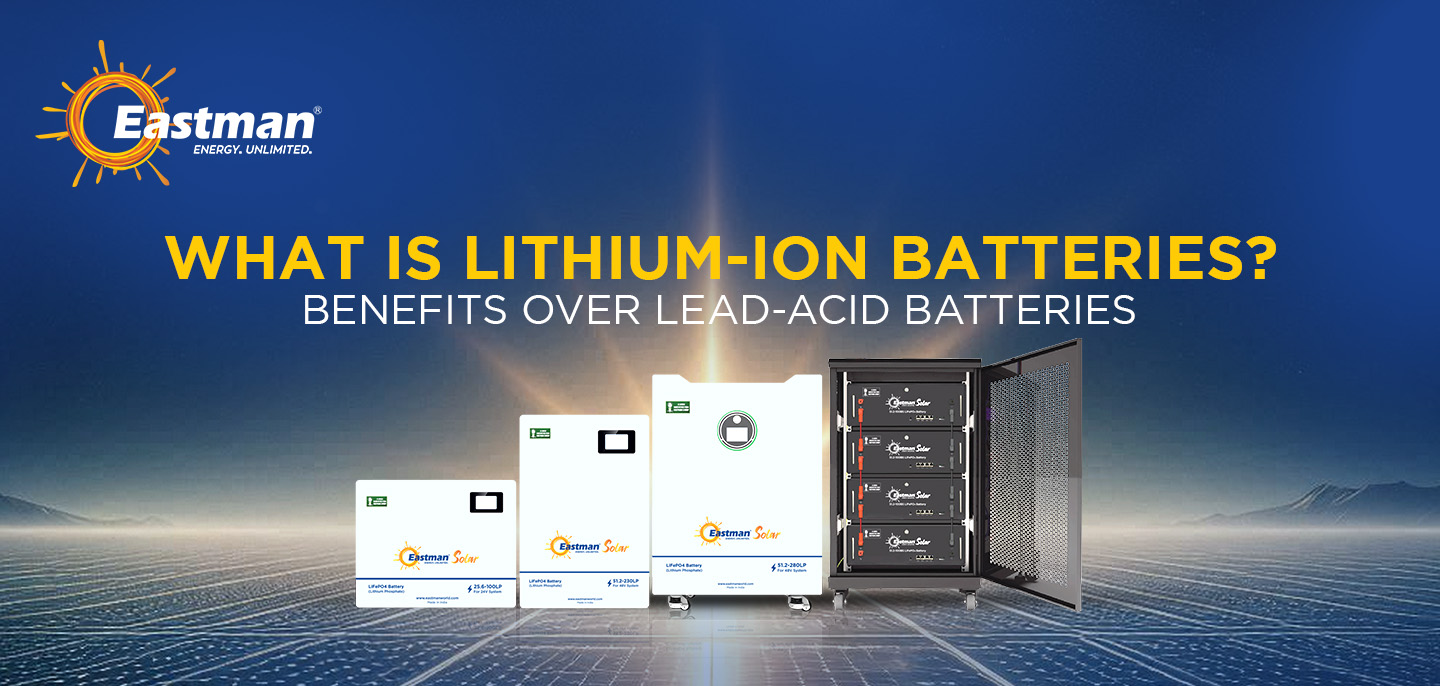
What Are Lithium-ion Batteries? Benefits Over Lead-acid Batteries
Energy storage has emerged as a critical pillar supporting the renewable energy revolution, particularly in applications such as rooftop solar systems, electric mobility, and power backup solutions. Among the various energy storage technologies available today, lithium-ion batteries—especially those supplied by leading lithium-ion battery companies in India—are widely recognized for their efficiency, reliability, and long service life.
Understanding Lithium-ion Batteries
Lithium-ion batteries are rechargeable energy storage systems in which lithium ions move between the cathode and anode during charging and discharging cycles. This controlled movement of ions enables highly efficient energy storage and release. Due to these advantages, lithium-ion batteries are extensively used in smartphones, laptops, electric vehicles (EVs), renewable energy systems, and lithium-ion–based inverters.
Compared to lead-acid batteries, which use lead plates and liquid electrolytes, lithium-ion battery packs are significantly lighter, more compact, and far more resilient. Depending on the application, lithium-ion batteries are available in several chemistries, including:
- Lithium Iron Phosphate (LFP): Known for high safety, excellent thermal stability, and long cycle life. LFP batteries are widely used in solar energy storage systems and EV charging stations.
- Lithium Nickel Manganese Cobalt (NMC): Offers higher energy density, making it ideal for space-constrained applications such as electric vehicles.
- Lithium Cobalt Oxide (LCO): Provides high energy storage capacity and is commonly used in portable electronic devices.
- Lithium Titanate (LTO): Supports ultra-fast charging and exceptional durability, making it suitable for demanding industrial applications.
Lead-acid Batteries: Limitations
Lead-acid batteries store energy using lead plates immersed in a liquid electrolyte. While they are relatively inexpensive and commonly used in conventional inverters and vehicles, they come with several drawbacks. These batteries are heavy, have low energy density, require frequent maintenance, and offer a comparatively short lifespan. Due to these limitations, lithium-ion technology is increasingly preferred for modern energy storage applications.
Benefits of Lithium-ion Batteries Over Lead-acid Batteries
1. Higher Energy Density
Lithium-ion batteries store more energy in a smaller volume, making them lighter and more compact. Their reduced size and weight make them easier to install and transport, especially in solar power systems and inverter applications where space is limited.
2. Longer Lifespan
While lead-acid batteries typically last 2–4 years, lithium-ion batteries can operate efficiently for 8–10 years or more, depending on usage conditions. Their extended lifespan and durability result in fewer replacements over time, making them a more cost-effective solution in the long run.
3. Faster Charging
Lithium-ion batteries charge 3–4 times faster than lead-acid batteries. This rapid charging capability is especially beneficial for solar energy storage systems, ensuring reliable power availability during nighttime or cloudy conditions and supporting uninterrupted power supply requirements.
4. Enhanced Efficiency
Lithium-ion batteries deliver approximately 90–95% of the stored energy, compared to only 70–80% in lead-acid batteries. This higher efficiency means minimal energy loss and better utilization of generated solar power.
5. Low Maintenance
Lead-acid batteries require regular water topping, ventilation checks, and careful handling. In contrast, lithium-ion batteries are virtually maintenance-free and are equipped with advanced Battery Management Systems (BMS) that continuously monitor safety, performance, and health.
Conclusion
Lithium-ion technology represents the future of energy storage. Compared to lead-acid batteries, lithium-ion solutions offer superior efficiency, longer service life, faster charging, and minimal maintenance. With multiple chemistry options available, users can select lithium-ion batteries that best suit their specific requirements. From residential solar installations to lithium-ion batteries for inverters and industrial applications, trusted lithium-ion battery suppliers such as Eastman deliver reliable performance, extended longevity, and a cleaner, greener future.
