
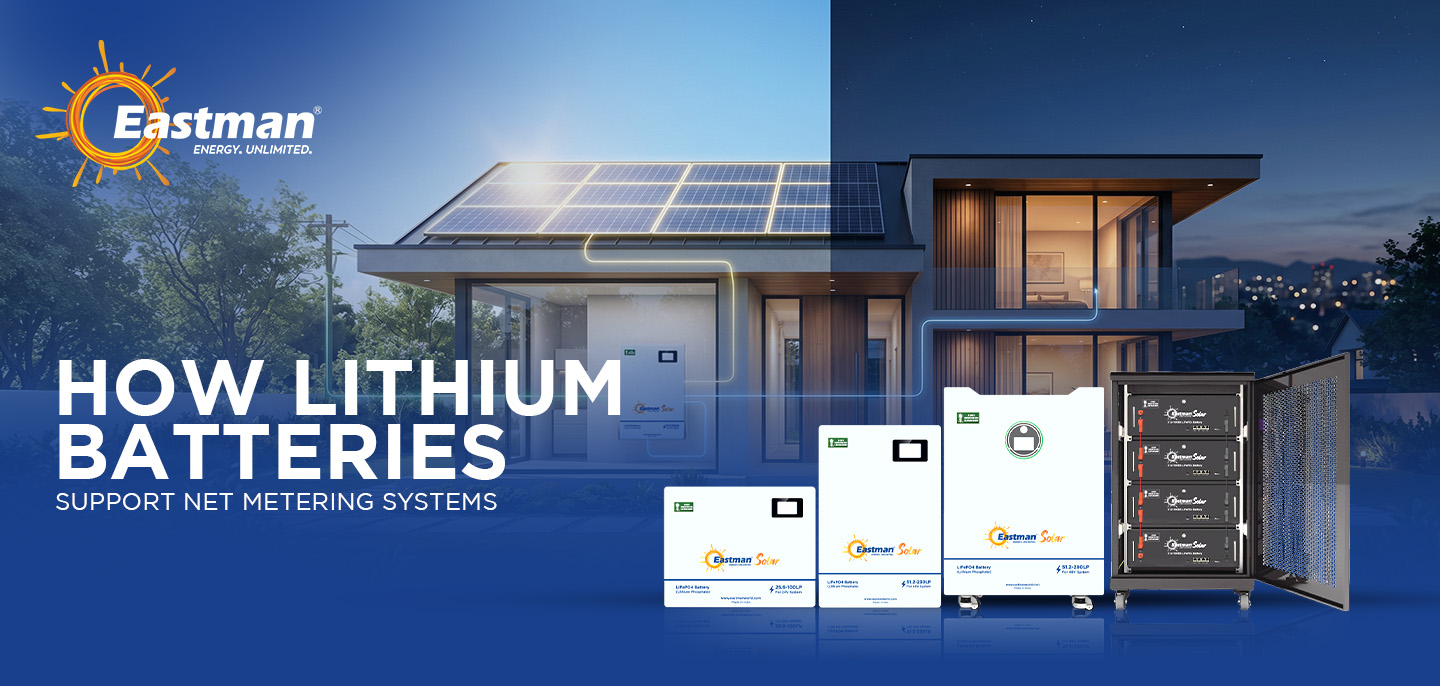
How Lithium Batteries Support Net Metering Systems
With the rapid growth of rooftop solar installations, net metering has become one of the most attractive policies for homeowners. It allows solar system owners to export excess electricity to the grid and receive credits in return. However, while net metering is beneficial, combining it with lithium battery storage can significantly enhance savings, energy independence, and system efficiency.
In this blog, we will explore how lithium batteries support net metering systems and why they are becoming an essential part of modern residential solar setups.
What Is Net Metering?
Net metering is a billing mechanism that allows homeowners with solar panels to send excess electricity back to the grid. When your solar system generates more power than your home consumes:
- The surplus energy is exported to the grid.
- You receive credits from your electricity provider.
- These credits offset your electricity usage at night or during low solar production.
This system reduces electricity bills and improves return on investment for rooftop solar systems.
The Limitation of Net Metering Alone
While net metering is beneficial, it has certain limitations:
- Export tariffs may be lower than retail electricity rates.
- Policies and regulations may change over time.
- Some utilities limit the amount of energy that can be exported.
- Power outages still leave homes without electricity (in most grid-tied systems).
This is where lithium battery storage adds significant value.
How Lithium Batteries Enhance Net Metering Systems
- Store Excess Solar Energy Instead of Exporting It
Instead of sending surplus energy to the grid at a lower tariff, a lithium battery stores that energy for later use.
For example:
- Daytime: Solar generates excess power → battery stores it.
- Nighttime: Home runs on stored solar energy instead of grid power.
This increases self-consumption, meaning you use more of your own solar power rather than selling it at a lower rate.
- Maximize Electricity Bill Savings
In many regions, the export rate (feed-in tariff) is lower than the electricity purchase rate.
By using lithium batteries:
- You reduce dependence on grid electricity.
- You avoid buying expensive peak-hour electricity.
- You increase overall savings.
The more solar energy you consume directly, the faster your system pays for itself.
- Provide Backup During Power Cuts
Traditional grid-tied net metering systems shut down during power outages for safety reasons.
However, when you add a lithium battery with a hybrid inverter:
- The system can isolate from the grid.
- The battery supplies backup power.
- Essential appliances continue running.
This is especially beneficial in areas with frequent power cuts.
- Reduce Grid Dependency
Lithium battery storage allows homeowners to:
- Use solar energy 24/7
- Reduce reliance on utility companies
- Protect against future tariff increases
Over time, this increases energy independence and financial security.
- Support Time-of-Use (TOU) Tariffs
In some areas, electricity prices vary depending on time of day.
Lithium batteries can:
- Store energy during low-cost periods
- Discharge during high-cost peak hours
This intelligent energy management further reduces electricity bills.
Why Lithium Batteries Are Ideal for Net Metering Systems
Not all batteries are suitable for residential solar applications. Lithium batteries (especially LiFePO4) offer significant advantages:
High Efficiency
Lithium batteries have round-trip efficiency of 95% or higher, meaning minimal energy loss during charging and discharging.
Longer Lifespan
- 4000–6000+ cycles
- 8–15 years lifespan
This matches the long-term investment nature of solar systems.
Faster Charging
Lithium batteries charge quickly during peak solar hours, maximizing energy capture.
Compact and Maintenance-Free
Unlike lead-acid batteries, lithium batteries:
- Require no water topping
- Produce no harmful gases
- Can be installed indoors safely
Example: 48V Lithium Battery with Net Metering
Consider a home with:
- 5kW rooftop solar system
- 48V 100Ah lithium battery
During the day:
- Solar powers appliances
- Excess energy charges the battery
- Extra surplus goes to the grid
At night:
- Battery powers lights, fans, refrigerator
- Minimal grid usage
This setup increases self-consumption and reduces monthly electricity bills significantly.
Does Adding a Lithium Battery Replace Net Metering?
No. Instead, it optimizes net metering.
Think of it as:
- Net metering = earn credits
- Lithium battery = store and use your own power first
The combination provides:
- Better savings
- Backup power
- Higher energy independence
Protection against policy changes
Future of Net Metering with Battery Storage
Globally, net metering policies are evolving. Some regions are:
- Reducing export tariffs
- Introducing grid charges
- Limiting export capacity
In such cases, battery storage becomes even more valuable because:
- It reduces dependence on policy benefits.
- It ensures you maximize your own solar energy usage.
- It stabilizes household energy costs.
Lithium battery integration is quickly becoming a standard feature in modern residential solar systems.
