
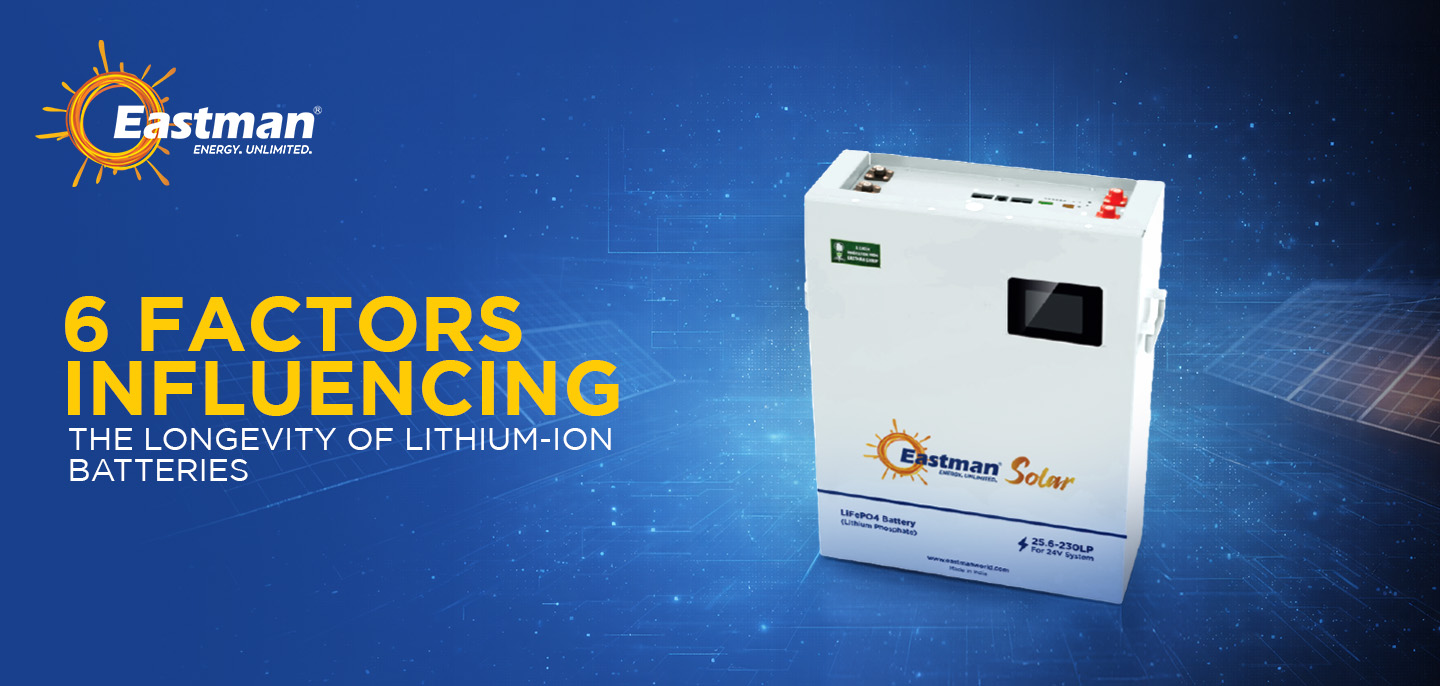
6 Factors Influencing the Longevity of Lithium-ion Batteries
Lithium-ion batteries have transformed the energy storage landscape and now play a vital role across multiple applications, including portable electronics, electric vehicles, and renewable energy systems. In India’s rapidly expanding solar energy sector, lithium-ion batteries are increasingly used to store and efficiently utilize solar power.
Understanding the factors that influence the longevity of lithium-ion batteries is essential for maximizing performance, reliability, and return on investment. This article explores six key factors that directly impact the lifespan of lithium-ion batteries, with particular emphasis on their use in solar energy storage systems.
1. Depth of Discharge (DoD)
Depth of Discharge (DoD) indicates how much of a battery’s total capacity is used before it is recharged. Regularly discharging a battery to very low levels can significantly shorten its lifespan.
For optimal battery health and longevity, maintaining a DoD between 20% and 80% is recommended. This factor is especially important in solar applications, where batteries often undergo daily charge-discharge cycles. Reducing deep discharges helps minimize internal stress and prolong overall battery life.
2. Operating Temperature
Temperature has a major influence on both the performance and lifespan of lithium-ion batteries. Exposure to extreme heat accelerates chemical reactions inside the battery, leading to faster degradation and reduced capacity.
On the other hand, extremely low temperatures can limit the battery’s ability to deliver power efficiently. Maintaining batteries within the manufacturer-recommended temperature range is critical, particularly in solar installations where ambient conditions can vary significantly.
3. Charging Patterns
Charging behavior plays a crucial role in determining battery longevity. While fast charging offers convenience, frequent rapid charging can place additional stress on battery cells and accelerate aging.
In solar energy systems, slow and consistent charging throughout the day is generally more beneficial. Modern solar inverters and charge controllers use advanced charging algorithms that dynamically adjust charging rates based on solar availability, battery state of charge, and temperature.
These intelligent systems help optimize battery health and extend service life.
4. Quality of Battery Components
The materials and manufacturing processes used in lithium-ion batteries have a direct impact on their durability and lifespan. High-quality batteries use premium electrodes, separators, and electrolytes that are more resistant to wear, chemical degradation, and thermal stress.
Choosing batteries from reputable manufacturers ensures better performance, higher safety standards, and longer operational life.
5. Battery Management System (BMS)
A robust Battery Management System (BMS) is essential for maximizing the longevity of lithium-ion batteries. The BMS continuously monitors and controls critical parameters such as voltage, current, and temperature at the cell level.
By preventing overcharging, over-discharging, short circuits, and thermal runaway, the BMS ensures safe operation and helps maintain optimal battery health throughout its lifecycle.
6. Usage Patterns and Cycling
Battery usage frequency and cycling intensity significantly influence longevity. Lithium-ion batteries are designed for a specific number of charge-discharge cycles, after which their usable capacity gradually declines.
Capacity degradation is influenced by factors such as DoD, temperature, and charging behavior. Balanced and moderate usage patterns can significantly extend battery life.
Maximizing Lithium-ion Battery Longevity in Solar Applications
To achieve the best performance and lifespan from lithium-ion batteries in solar energy systems, consider the following best practices:
- Implement smart energy management systems that optimize battery usage based on solar generation and energy demand.
- Ensure proper installation with adequate ventilation and effective temperature control.
- Use high-quality, solar-specific lithium-ion batteries from trusted manufacturers.
- Conduct regular monitoring and performance checks to detect issues early.
- Slightly oversize the battery bank to reduce the average depth of discharge.
- Educate users on correct battery operation and long-term care practices.
Conclusion
Understanding and managing the factors that influence the longevity of lithium-ion batteries is key to maximizing the benefits of solar energy storage systems.
By controlling depth of discharge, maintaining proper temperature conditions, adopting optimized charging patterns, selecting high-quality components, relying on advanced battery management systems, and following balanced usage practices, users can significantly extend battery life and enhance overall system performance.
As India’s solar energy ecosystem continues to evolve, staying informed about battery technology advancements and best practices will be essential for leveraging lithium-ion batteries as a reliable, efficient, and future-ready energy storage solution.
